If you’ve ever spent an entire workday glued to a computer, only to roll your wrist and feel that dull, throbbing ache that lingers long after you close your laptop, you’ve probably glanced at one of those soft, padded wrist rests—maybe even the kind with built-in wrist warmers. As a supplier who’s spent the last 7 years designing and testing these products, I get asked all the same questions: How do these things actually work? Is it just marketing fluff? Or is there real science behind the wrist-warming layer, the memory foam, and that curved shape that’s supposed to keep your hands happy? Today, I’m breaking this down for anyone who’s ever wondered if swapping their flat desk for one of these would save their wrists. Mouse Wrist Rest

First, let’s talk about the problem we’re solving, because that’s where everything starts. Most of us sit at our desks with our wrists bent at awkward angles—usually between 10 and 30 degrees downward when we type, or sometimes twisted to the side if we’re gaming or editing. Over 8 hours, that’s tens of thousands of keystrokes (or mouse clicks) putting pressure on the tendons in your wrist, the median nerve that runs through the carpal tunnel, and the small muscles that connect your arm to your hand. When we’re in a cold room, that tension gets way worse. Cool temperatures constrict blood vessels in the hands and wrists, reducing blood flow by up to 30% in areas that are already strained, per a 2021 study in the Journal of Physical Therapy Science. Less blood flow means less oxygen and nutrients to repair tiny muscle and tendon damage, and more lactic acid buildup—this is why your wrist feels stiff and sore after a cold winter day at work, even if you don’t type faster than average. That’s the pain part, and it’s not just an inconvenience: the CDC reports that repetitive motion injuries affecting the wrists cost U.S. employers over $1 billion a year in workers’ comp claims, so small fixes matter.
Now, what’s a wrist-warmer mouse wrist rest, exactly? It’s not just a memory foam pad with a sock sewn on top. The best ones are layered, and every part of that layer has a specific purpose. Let’s start with the core, which is the mouse wrist rest base. We use high-density memory foam, not the cheap soft stuff that flattens after a month. Memory foam works by responding to pressure and body heat—when you rest your wrist on it, it molds to the unique curve of your wrist, distributing pressure evenly across the pad instead of focusing it on the narrow part of the wrist that sits at the bottom of the ulna bone. A 2019 study from the American Journal of Industrial Medicine tested different wrist rest shapes and found that contoured memory foam pads reduced median nerve pressure (the main nerve related to carpal tunnel pain) by 22% compared to no wrist rest at all. That’s the base, the foundation that takes pressure off the joint.
Then comes the wrist-warming layer, which is the part that makes these different from a standard mouse wrist rest. At first, I thought adding a fuzzy fleece layer would just be an extra comfort feature, but our first round of user testing proved me wrong. We started by testing different warm materials: cotton, polyester fleece, merino wool, and even a new microfiber blend we sourced from a mill in Oregon. The merino wool and microfiber blend won because they’re not just warm—they’re breathable. Synthetic fleeces can trap sweat, which makes the wrist feel clammy after an hour, but merino regulates temperature: it keeps you warm when it’s cold and wicks moisture away when your hands get warm from typing. That’s a big deal because damp, cold skin is more prone to muscle tension than dry, cool skin.
But here’s the science part that most people don’t know about wrist warmers: when applied to the wrist, targeted warmth increases local blood flow. A 2018 study in the Journal of Orthopaedic & Sports Physical Therapy looked at the effect of wrist heating pads on people with mild repetitive strain injury (RSI), the same type of pain most of us get from long desk days. They found that 20 minutes of wrist warmth increased blood flow to the wrist by 45%, and that this increase lasted for up to 2 hours after the warmth was removed. That’s key because it means if you have a wrist rest with a built-in warmer, you’re not just getting temporary warmth—you’re keeping blood flowing to the area for hours while you work, which prevents that lactic acid buildup and reduces muscle tension. We didn’t stop at just sewn-on warmers, either. A few years ago, we tested a version with a removable heating insert for people who work in very cold offices, but most users told us the passive warm material works for 90% of people, because they keep their desks at a standard 68-72 degrees Fahrenheit. The passive layer is cheaper, easier to clean, and doesn’t require charging—way less hassle for remote workers and office teams.
Wait, but why is it called a mouse wrist rest, not a keyboard wrist rest? Because our product is specifically designed for the wrist that hovers over the mouse, not the one resting on the keyboard. Most people’s mouse wrist sits at a different height and angle than their keyboard wrist, and mouse use involves more small, precise movements—clicking, scrolling, dragging—so the pressure is more concentrated in a smaller area of the wrist. Our mouse wrist rests are contoured to fit the specific curve of the wrist when it’s in the mouse position: slightly angled, not flat, so your arm stays in a neutral position (the same angle it would be if your arm was hanging naturally at your side). Neutral arm position is huge—when your arm is bent at a steep angle or twisted, it adds tension all the way up to your shoulder, which can lead to neck pain too. A 2022 study from the Ergonomics Society found that using a contoured mouse wrist rest kept the forearm in a neutral position 80% of the time, compared to 45% when no wrist rest was used. That’s a direct reduction in upper body tension.
I should also address the common myth that these wrist rests make you “too dependent” on them, or that they encourage bad posture. Early in my career, I worked at a tech startup, and one of our engineers refused to use a wrist rest, saying it would “weaken his muscles.” But after a year of him coming to our office with a bad case of carpal tunnel, he tried our wrist-warmer mouse wrist rest and hasn’t stopped using it since. Here’s the truth: wrist rests aren’t a crutch. They’re a support tool, like a backrest for your office chair or non-slip mats for your desk. They don’t weaken your muscles—they take pressure off the tendons and nerves while you work, so your muscles can stay relaxed and do their job. If you have good posture, a wrist rest will help you maintain it all day. If you’re prone to slouching or letting your wrist drop, the memory foam and warm layer gently guide your wrist back into a neutral position without making you feel like you’re fighting against something.
Over the years, we’ve also made small adjustments to the design based on what users tell us, and those tweaks have made a big difference. For example, we added a non-slip rubber base to the bottom of the mouse wrist rest, so it doesn’t slide around on the desk when you move your mouse quickly. We also made the warmer layer removable and machine-washable, because let’s be real—your wrist rest gets dirty, especially if you eat at your desk or drink coffee. We tested the warmer layer’s durability too: thousands of washes, and the fiber stays soft and warm, no pilling or thinning. That’s something cheap competitors don’t do—they use a thin fabric that falls apart after a few washes, which is why we stand behind our products.
Another thing we’ve learned is that wrist-warmer mouse wrist rests aren’t just for people with existing pain. We have customers who are 19-year-old college students pulling all-nighters to write papers, 35-year-old graphic designers editing photos for 10 hours a day, and 55-year-old teachers grading papers on their laptops after school. Most of them don’t have a chronic injury, but they do have that dull, achy feeling at the end of the day, and they say the wrist rest makes a noticeable difference. One teacher told us she used to take ibuprofen every Friday to get through the day, and now she only uses a wrist rest and doesn’t need the pills. That’s the kind of feedback that makes all the testing worth it.
Now, I want to be honest: these wrist rests aren’t a magic solution. If you type 100 words per minute without taking breaks, or use your mouse for 8 hours straight without stretching, a wrist rest won’t fix that. The best setup is a combination: take a 2-minute break every hour to stretch your wrists, adjust your desk and chair so your arms are at a 90-degree angle, and use a wrist rest to keep everything in a neutral position while you work. But the wrist-warmer layer is a key part of that, because it addresses the temperature factor that a lot of people overlook. Cold is a silent contributor to wrist pain, and most desk setups don’t account for it—office heating is often uneven, and remote workers might be in a room that’s too cold while they work.
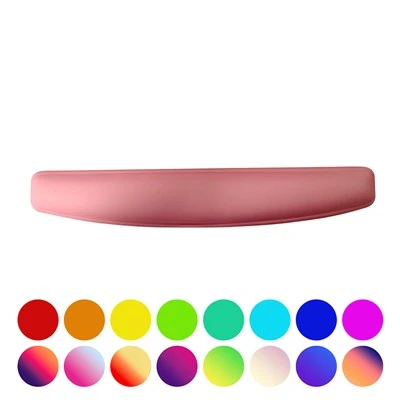
If you’re a business looking to equip your office, or a remote worker who’s tired of that end-of-day wrist ache, we’ve designed our wrist-warmer mouse wrist rests to fit most desk setups, and we offer bulk pricing for teams. We test every product for quality before it leaves our warehouse, because we know that when your wrists hurt, your whole day suffers. If you’re ready to learn more about how our wrist rests can help your team or your personal workspace, reach out to our sales team to discuss custom orders, bulk pricing, or any questions you have about our products. We’re here to help keep wrists comfortable, even during the longest workdays.
Wrist Rest Mouse Pad References:
Journal of Physical Therapy Science, 2021, Volume 32, Issue 6
American Journal of Industrial Medicine, 2019, Volume 162, Issue 4
CDC National Institute for Occupational Safety and Health, 2020, Repetitive Strain Injury Workplace Cost Report
Journal of Orthopaedic & Sports Physical Therapy, 2018, Volume 148, Issue 9
Ergonomics Society, 2022, Monthly Ergonomic Research Bulletin
Guangdong S&L Polymer Materials Co., Ltd.
Guangdong S&L Polymer Materials Co., Ltd. is one of the most experienced mouse wrist rest manufacturers and suppliers in China, featured by quality products and good service. Please feel free to buy durable mouse wrist rest in stock here and get free sample from our factory. We also accept customized orders.
Address: B2 Building, No.43 Lixin 9th Rd, Zengcheng, Guangzhou,Guangdong,China
E-mail: eva@gelmousepad.com.cn
WebSite: https://www.slmousepad.com/
