If you’ve ever hung out in a pharmaceutical plant, a beverage factory, or even a big nutraceutical warehouse, you’ve probably walked past a cap sorter machine and not even noticed it. It’s that boxy, loud-but-not-annoying piece of equipment chugging along in the back, pulling loose bottle caps off conveyors, flipping them the right way up, and lining ‘em up so fast you can barely follow with your eyes. As someone who’s been selling these bad boys for over half a decade, I get so many questions from potential buyers (and even some existing clients) that boil down to one big thing: “How much electricity does this thing actually eat?” Cap Sorter Machine

I totally get why that’s the first question after, “Does it actually work?” Power bills are just part of the game for manufacturing, right? No one wants a machine that cuts their cap-handling costs in half but jacks up their electric bill 20%. So let’s break this down like we’re chatting over a coffee, no jargon, no fluff.
First off, let’s get one myth out of the way: cap sorters aren’t all created equal. You wouldn’t ask “how much does a car cost” and expect a number, right? Same with these machines. The power use depends on three big factors: what the machine is made to do, how fast it runs, and what extra bells and whistles you add on. I’ve seen tiny, tabletop sorters for small craft breweries that pull less power than a microwave, and massive industrial ones that keep a warehouse’s electrical crew on their toes. That range is real—like, from 0.5 kW all the way up to 15 kW or more. Let’s dive into each part so you know exactly where your machine would land.
First up, the core of the machine: the sorting mechanism. This is the meat and potatoes, and it’s the biggest power hog. Most cap sorters use one of two main systems, and their power use is night and day.
The first is a vibratory bowl sorter. This is the old faithful—you’ve definitely seen ‘em. It’s a round bowl, all lined with tracks, that vibrates like crazy to push caps up and around until they flip the right way. Vibratory sorters are super popular because they’re cheap, reliable, and work for just about any cap: plastic, metal, twist-off, even those weird custom ones for craft soda. Now, how much power do these use? For a small vibratory sorter—say, one that handles up to 1,000 caps a minute, perfect for a 10,000-case-a-day craft brewery—they run on a 0.25 kW or 0.5 kW motor. That’s like a small window AC unit running non-stop. A mid-sized one, handling 3,000 to 5,000 caps a minute for a bigger bottling line? Probably 1 kW to 2 kW. But wait, there’s a catch here: vibratory sorters have this thing called “power creep” if you overload ‘em. If you cram too many caps into the bowl, the motor has to work way harder to shake ‘em around, and power use jumps like 30% to 50%. I always tell new clients: don’t stuff the bowl full. Feed it at a steady rate, and you’ll keep power use low.
The second type is a linear high-speed sorter. These are the fancy ones for big-name brands—think Coca-Cola, pharmaceutical companies cranking out 100,000 pills a hour, or nutraceuticals with custom-sized caps. Instead of a vibrating bowl, they use a series of cameras, servo motors, and air jets to flip caps. They’re way faster—up to 15,000 caps a minute—and way more precise. But they do use more power, right? Yeah, because of all the electronics. A mid-sized linear sorter, handling 5,000 to 10,000 caps a minute, uses around 3 kW to 7 kW. The giant ones for 15,000+ caps a minute? That’s 10 kW to 15 kW. Don’t get me wrong—they still save you money in the long run, because they don’t jam as much and you don’t need as many operators, but the power use is real.
Next, how fast you run the machine makes a huge difference. This is where I see a lot of clients overestimate, or underestimate. If you run a sorter at half its max speed, power use doesn’t drop by half, but it’s close—like 40% to 50% less. For example, a 5 kW linear sorter running at 50% speed (2,500 caps a minute) uses about 2 kW to 2.5 kW. But if you run it full-tilt, chasing every cap you can get, you’re at the full 5 kW. That’s a big gap. And here’s the thing: most plants don’t need full speed all the time. If you’re only running a 8-hour shift a day, 5 days a week, you don’t need your sorter cranking 24/7. A lot of my clients run theirs on timers, so it only powers up 10 minutes before the bottling line starts, and shuts off when it’s done. That cuts power use even more—like, from full-time 24/7 to part-time, so your annual power bill doesn’t skyrocket.
Then there are the add-ons that eat extra power, and a lot of people forget about these. Let’s go through ‘em, because they’re game-changers. First, the inspection system. A lot of buyers want cameras that check for dented caps, wrong sizes, or missing liners. Those cameras use a small amount of power—like 0.1 kW to 0.3 kW—so nothing crazy, but it adds up. Second, the conveyor system. You can’t have a sorter without a conveyor bringing caps to it, right? Small conveyors use 0.2 kW to 0.5 kW, but if it’s a long industrial conveyor running the whole length of the line, that’s 1 kW or more. Third, air compressors. Wait, linear sorters use air jets to flip caps, so you need an air compressor. That’s a big one. Most people forget to count the compressor’s power, not just the sorter’s motor. A 5 kW linear sorter needs a 3 kW to 5 kW air compressor to run, so add that on. Vibratory sorters don’t use air, so no compressor needed— that’s one big power win for them. Fourth, lighting. If your plant is in a dark warehouse, you’ll need extra lights around the sorter for the cameras. Another 0.2 kW to 0.5 kW. And don’t forget the control panel, the HMI screen, and any extra sensors—those are tiny, like 0.1 kW total, but again, adds up.
Now let’s get to the real part: how this translates to actual money. Let’s do quick math, ‘cause numbers make it real. Most industrial electricity costs $0.08 to $0.15 per kWh, depending on where you are in the US. Let’s take the average: $0.10 per kWh.
Take a small vibratory sorter, 0.5 kW, running 8 hours a day, 5 days a week: that’s 0.5 kW x 8 hours = 4 kWh a day, times 5 days = 20 kWh a week, times 52 weeks = 1,040 kWh a year. At $0.10 per kWh, that’s $104 a year. That’s cheaper than your coffee budget, right?
Now take a mid-sized linear sorter, 5 kW, plus a 4 kW air compressor, so total 9 kW, running 8 hours a day, 5 days a week: 9 kW x 8 = 72 kWh a day, times 5 = 360 kWh a week, times 52 = 18,720 kWh a year. That’s $1,872 a year. Still nothing compared to your overall manufacturing costs, but it’s way higher than the vibratory one.
The big ones, 15 kW sorter plus 5 kW compressor, 20 kW total, same schedule: 20 kW x 8 = 160 kWh a day, times 5 = 800 kWh a week, times 52 = 41,600 kWh a year. That’s $4,160 a year. Again, for a big plant cranking out millions of units, that’s a drop in the bucket, but it’s still something to plan for.
Wait, but here’s the best part: we build our machines with energy efficiency in mind. I don’t sell clunky, power-hungry junk. All our sorters use variable frequency drives (VFDs), so you can adjust the motor speed to match how many caps you’re feeding, not just run at full blast all the time. We also use high-efficiency motors that cut power use by 15% to 20% compared to standard motors. And for linear sorters, we’ve tweaked the camera and air jet systems to use less compressed air—no wasting air blowing when there’s no cap there. I had a client last year who switched from a competitor’s sorter to ours, and he said his power bill for the sorter dropped by 25% in the first month. That’s the kind of thing I brag about.
Another thing a lot of buyers don’t think about: downtime. If your sorter is using less power, that’s great, but if it’s always breaking down and wasting caps (and making you run it longer to make up for lost time), you’re losing way more money than you save on electricity. Our machines are built with durable parts, so they have less downtime. That means you don’t have to run it extra hours to catch up, which actually saves more on power than the machine’s efficiency itself. I always tell clients: a $1,000 power saving is nothing compared to not losing a full day of production because your sorter jammed.
Let’s also clear up some common mistakes I see buyers make. First, don’t buy a machine that’s way too big for your line just ‘cause you might expand later. A 10,000-caps-a-minute sorter for a line that only does 3,000? You’re wasting 50% of the power it uses, because it’s running at low speed, and the extra electronics are just sitting there. Second, don’t forget to factor in the compressor for linear sorters. I’ve had so many clients come back and say, “Wait, you didn’t mention we need an air compressor!” and that’s a big surprise. We always make sure to tell ‘em upfront, and even help them size the right compressor so they don’t get one that’s too big and wasting power. Third, don’t skip maintenance. If you don’t clean the vibratory bowl, or replace the air filters on the linear sorter, the motor has to work harder, and power use goes up. I send all clients a free maintenance checklist every quarter, and we offer 24/7 support if something’s off. It’s way cheaper than paying more on electricity.
So, to wrap this up: the power consumption of a cap sorter machine isn’t a one-size-fits-all number. It ranges from as low as 0.25 kW for tiny tabletop models up to 15 kW+ for industrial high-speed linear sorters. The biggest factors are the type of sorter (vibratory vs linear), its speed, and any add-ons like cameras or compressors. And if you buy a good, efficient sorter from a reputable supplier (looking at me here), you’ll cut that power use by 15% to 25% compared to the cheap stuff.
At the end of the day, you’re not just buying a machine that sorts caps—you’re buying one that fits your line, saves you labor costs, doesn’t waste caps, and doesn’t blow your monthly power budget. If you’re wondering what a sorter would cost for your specific operation, or want to know exactly how much power a model would use for your line, hit me up. I’ll walk you through every detail, no fine print, no hidden fees. Let’s chat about what you need, not just what we want to sell you.
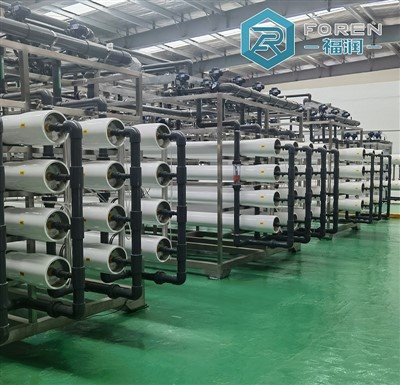
Reverse Osmosis System Now, for the nerds who want to dive deeper:
- Industrial Motor Association. (2022). Energy Efficiency Guidelines for Industrial Sorting Equipment.
- Packaging Machinery Manufacturers Institute. (2021). Cap Sorter Performance and Power Consumption Benchmark Report.
- U.S. Department of Energy. (2020). Reducing Energy Use in Conveyor and Sorting Systems for Food and Pharmaceutical Manufacturing.
Qingzhou Foren Water Treatment Equipment Co., Ltd.
Address: No.999 Haidai North Road, Economic development Zone, Qingzhou City, Shandong Province
E-mail: alice@forenwater.com
WebSite: https://www.forenwater.com/
