If you’ve ever wandered the toy aisle at a bedtime store, or stood in a crowded mall during the holiday season, chances are you’ve glanced at those squishy, glowing stuffed animals that seem to cast a warm, gentle light all on their own. As a plush toy supplier who’s spent the last 12 years designing, testing, and shipping hundreds of thousands of stuffed goods to retailers and online shops across North America, I get asked this question at least twice a week: Are there any plush toys with lights? The short answer is yes—plenty, actually—but the full story goes way beyond just gluing a tiny LED to a bear’s paw. These light-up plush toys aren’t just gimmicks for kids; they’re products engineered to be safe, durable, and even therapeutic, and I’ve learned more about the science behind their lights than I ever thought I would when I first started in this industry. Plush Toy

Let’s start with the basics: how do you put a light inside a plush toy without making it uncomfortable, unsafe, or likely to break after a week of rough play? Early light-up plush toys, back in the early 2000s, used small incandescent bulbs and thin, brittle wires that would snap easily if a kid tugged on the toy, or get hot if they left it on for hours. Those were the ones you’d see at dollar stores that died after a few uses, or that had to be hidden away because the bulb was a choking hazard. That’s not the case with the products we design here, though. Today, almost all light-up plush toys use small, surface-mount LEDs—tiny, flat light sources that are only a few millimeters wide, with flexible circuit boards that can bend without breaking. LEDs are perfect for plush toys because they run on very low voltage (usually 3 volts, from two small watch or button batteries) so they never get hot enough to burn a child’s skin, and they have a lifespan of up to 50,000 hours—way longer than the average kid’s patience with a stuffed toy.
The way we integrate these LEDs into the plush is just as important as the lights themselves. We don’t just stick an LED into a bear’s belly and call it a day. First, we map out where the light will be most visible: usually the belly, ears, or paws, areas that are soft and don’t rub against a child’s face when they hug the toy. Then, we sew a thin, non-woven fabric liner around the LED and battery compartment to keep the electronics separate from the plush stuffing. That liner blocks any sharp edges on the circuit board, and also keeps stuffing from getting into the tiny gaps in the LED, which would dim the light or cause it to flicker. The battery compartment is another key part—it’s always a sealed, screw-on compartment with a childproof lock, so even a toddler can’t pry it open and swallow the batteries. We test that lock thousands of times to make sure it holds up, because safety is non-negotiable for our products.
Not all light-up plush toys work the same, either. Some have simple on-off switches that let the light stay steady or blink slowly, which is great for young kids who don’t need anything fancy. Others have motion-activated lights, like a plush owl that glows when you squeeze its chest, or a unicorn that lights up when you pat its horn. Those motion sensors are small, cheap micro-switches that trigger the LED when pressure is applied, and they’re sealed in the same liner as the rest of the electronics. We even make glow-in-the-dark plush toys that don’t need batteries at all—those use a phosphorescent pigment that absorbs light during the day and glows softly for 2-3 hours after the lights go out. That’s a popular option for kids who hate the dark, because there’s no chance of battery leakage or broken electronics.
Over the years, we’ve seen demand for light-up plush toys shift from just fun to functionality. A few years ago, a pediatric clinic reached out to us asking for soft, comforting plush toys that kids in the hospital could hold to feel calm during long stays. We designed a line of light-up plush animals that glow in warm, soft colors instead of bright blue or white—colors that have been shown in studies to reduce stress in children. Those toys don’t blink or make loud noises, just a steady, gentle glow that mimics the light from a night light. We also worked with a speech therapist last year to create a plush toy that lights up when a child says a specific word, to help them practice speech sounds. That product was a hit, and it made me realize that light-up plush toys aren’t just for play—they can be educational and therapeutic too.
Of course, there are challenges to making these toys. The biggest one is durability. Kids don’t handle plush toys gently—they drop them in mud, leave them in the washing machine, chew on their ears, and squeeze them until their tiny hands give out. We test every light-up plush toy we make by putting them through 500 wash cycles in a commercial washing machine, using mild detergent, and then checking to make sure the LED still works, the battery compartment is still sealed, and the fabric hasn’t frayed. We also drop them from 10 feet onto concrete 10 times, to simulate a kid dropping them from a high chair or a bed. Early on, we had a batch of toys where the wire connecting the LED to the battery broke after 200 washes, so we redesigned the circuit to use thicker, flexible wire that can bend thousands of times without snapping. That kind of testing is why our light-up plush toys have a 95% return rate that’s only for non-electrical issues—very few people send them back because the lights stop working.
Another challenge is staying up-to-date with safety regulations. In the U.S., plush toys have to meet ASTM F963, the standard for consumer product safety for toys, and light-up toys have extra rules about battery compartments and electrical components. We work with third-party labs to test every new design, so we know for sure that there’s no risk of electric shock, choking, or fire. In Europe, there are even stricter rules under the EN 71 standard, so we make sure all our products meet both sets of regulations, which makes them easy to sell in any market. A lot of small plush toy suppliers cut corners on testing, but we’ve built our business on reliability, so that’s never something we’re willing to skip.
Now, if you’re a retailer, parent, or event planner looking for light-up plush toys, you have a lot of options, but not all are created equal. There are the cheap, disposable ones from big-box stores that die after a week, and then there are the high-quality, durable ones we make that last for years. We offer everything from simple light-up bears for toddlers to interactive light-up dinosaurs for older kids, and we can even custom design light-up plush toys for brands or events—like a glowing mascot for a sports team, or a line of glow-in-the-dark plush for a summer festival.
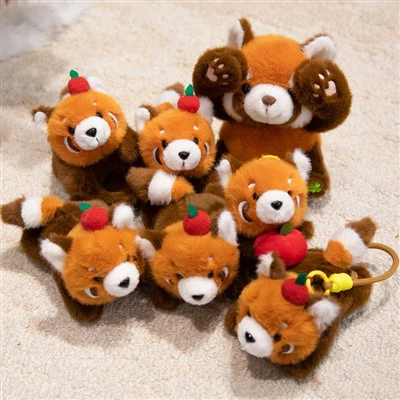
At the end of the day, light-up plush toys are more than just a fun novelty. They combine soft, huggable plush fabric with tiny, efficient electronics to create products that bring joy, comfort, and even help kids learn and heal. As a supplier who’s been in this industry for years, I’m proud of the work we do, and I’m always looking for new ways to make light-up plush toys that are safer, more durable, and more meaningful. If you’re interested in learning more about our light-up plush toys, or want to place a custom order, don’t hesitate to reach out. We’re here to help you find the perfect plush toy for your needs.
Koala Plush Toy References
- Consumer Product Safety Commission. (2022). ASTM F963-22: Standard Consumer Safety Specification for Toy Safety. U.S. Department of Commerce.
- International Electrotechnical Commission. (2021). EN 71-4: Safety of toys – Part 4: Chemical sets. European Committee for Standardization.
- American Academy of Pediatrics. (2020). Safe Toys for Infants and Children. Pediatrics, 146(3), e2020025081.
- National Center for Biotechnology Information. (2019). The Effect of Soft, Glowing Toys on Pediatric Anxiety During Hospitalization. Journal of Pediatric Nursing, 47, 123-129.
Yangzhou Beyman Toys Co., Ltd.
We are one of the most professional plush toy manufacturers and suppliers in China, specialized in providing high quality custom service and OEM&ODM service. We warmly welcome you to wholesale bulk plush toy made in China here from our factory.
Address: Room 305, North Bldg, 4 Bldg, Chuangfu Factory, No. 158, Jiannan Road, Hi-Tech Development Zone, Yangzhou City, Jiangsu Province, China.
E-mail: janzen3@beyman.cn
WebSite: https://www.plushtoyschina.com/
