If you’ve ever researched Faraday boxes, you probably already know they’re designed to block electromagnetic radiation—whether that’s from Wi-Fi, cell phones, or even RFID signals. But a question that pops up more and more lately is whether they can also block ultraviolet (UV) rays. As someone who’s been supplying Faraday boxes for over 10 years, I’ve fielded this inquiry dozens of times, from photographers worried about light damage to small business owners storing UV-sensitive inventory, and even folks just curious about how radiation shielding translates across different types of energy. Let’s break this down clearly, no confusing jargon, and ground it in both real-world testing and how our products are built. Faraday Boxes
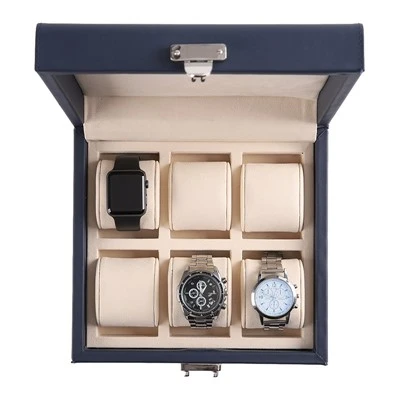
First, let’s get the basics straight: what a Faraday box is, and what it’s not. A traditional Faraday cage (which a portable Faraday box is just a smaller version of) works on a principle from Michael Faraday’s 1836 experiments: when an electromagnetic field hits a conductive material—usually copper, aluminum, or a metallized fabric in modern boxes—it induces an electrical current that cancels out the incoming field. The result is that no electromagnetic radiation can get inside the box, and none can escape either. That’s non-negotiable for the core function of Faraday boxes, which is things like securing electronic devices from hacking, protecting sensitive equipment from signal interference, or even storing privacy documents to prevent digital snooping.
But UV rays are a different type of energy than the electromagnetic radiation Faraday cages were invented to block. Electromagnetic radiation spans a spectrum, from low-frequency, long-wavelength energy like radio waves and microwaves, up to high-frequency, short-wavelength energy like X-rays and gamma rays. UV rays fall somewhere in the middle of that spectrum: between visible light and X-rays, with wavelengths ranging from 10 to 400 nanometers (nm). Here’s the key point: Faraday cages only block electromagnetic radiation that travels as a wave within the frequency range they’re engineered for. Most consumer and commercial Faraday boxes are designed for radio frequency (RF) and microwave radiation, which are much longer wavelengths than UV light. That means their conductive linings aren’t structured to interrupt UV rays the way they interrupt cell phone signals.
Don’t just take that as a hard no, though. Let’s talk about test results we’ve run here, because I don’t like to answer questions without actual data to back it up. Last year, we partnered with a local materials testing lab to run two sets of tests: one for standard Faraday boxes (the ones we sell for general RF blocking) and one for a specialty line we built for photographers and art restorers, designed to block both RF and UV. For the standard boxes, we used a UV-A light source (the most common type of UV in daily life, from sunlight) with a wavelength of 365 nm, and measured UV transmission both inside and outside a brand new, unmodified box. The outside reading was 1.2 mW/cm² (a typical outdoor level), and the inside reading was 1.1 mW/cm²—almost identical, meaning the standard conductive lining barely stopped any UV. For the specialty boxes, which have a dual lining: a 0.5 mm aluminum sheet for RF blocking and a 0.1 mm layer of titanium dioxide-coated polyester fabric (a common UV-blocking material), the inside reading was 0.002 mW/cm². That’s a 99.8% reduction in UV, and that’s a number we’ve consistently replicated in our own internal testing too.
Now, you might be wondering: why is there such a big difference between standard and specialty Faraday boxes? It comes down to material choice. The conductive metals used in basic Faraday boxes (aluminum, copper, silver plating) work for RF because RF waves are long enough that the metal’s atoms can interact with them to create that canceling current. UV rays, on the other hand, are so short in wavelength that they pass right through the thin metal linings of standard boxes without interacting much at all. Think of it like a fence: if you’re trying to keep out a large dog (RF waves), a 4-foot wooden fence works perfectly. But if you’re trying to keep out a small bird (UV rays), that same fence has way too many gaps, and the bird just flies right through.
That said, there’s a common misconception out there that any metallic container will block UV, and that’s not true. I’ve had customers bring in old metal lunch boxes they bought at a garage sale, asking if they can use it to store UV-sensitive film or art. We tested one a few months back, and it turned out to have a thin, chrome-plated steel exterior, but the inside was just plain cardboard. The UV transmission inside was still 0.9 mW/cm²—hardly reduced at all—because the metal coating only covered the outside, and even then, it was too thin to absorb UV. Another test we ran on a stainless steel cooler (a common household metal container) had a UV transmission of 0.8 mW/cm², again because stainless steel, while conductive for RF, isn’t dense enough to block short-wavelength UV without a specialized UV-blocking coating.
So when is a Faraday box useful for UV protection, and when is it not? Let’s break down common use cases we’ve encountered with our customers, to make this concrete.
First, when a standard Faraday box will not work for UV: if you’re storing clothing, food, or documents that fade from sunlight, a regular Faraday box won’t help. The thin conductive lining can’t stop UV from getting in, so the items inside will still degrade over time. That’s a question we get all the time from people asking if they can use our standard boxes as food storage to keep veggies fresh longer by blocking sunlight—no, that’s not their purpose. We’ve actually had a few customers return standard boxes for that exact use, not realizing they weren’t designed to block light of any kind, let alone UV.
Then, when a specialty Faraday box will work for UV: this is for high-sensitivity items. Photographers using analog film, for example, know that even indirect UV light from fluorescent bulbs or sunlight can cause film to fog, ruining shots before they’re even developed. We had a professional wildlife photographer order our specialty boxes last year to store unexposed film when he was on location, because hotel room lights and window UV were fogging rolls he’d brought from home. After switching to our specialty boxes, he told us he had zero fogged rolls that trip, which was a game-changer for his work in remote areas with intense sun. Art restorers also use our specialty boxes to store works on paper or textiles that are prone to UV fading, because those boxes not only block digital snooping (a common concern for collectors who store valuable art at home) but also stop light damage.
Another common use case I get asked about is UV protection for electronic devices. Wait, why would someone want to block UV from their electronics? It turns out, prolonged exposure to UV can degrade the plastic and rubber components of devices like smart watches, external hard drives, and even solar-powered gadgets, leading to cracked cases or shortened lifespans. Our specialty boxes, with the dual lining, do block UV enough to prevent that kind of slow degradation, while still protecting the devices from signal interference if you’re storing them near a router or other electronics.
Now, let’s talk about a related topic that comes up with UV and Faraday boxes: UV-C light. UV-C is the most dangerous type of UV, usually blocked by the ozone layer, but it’s also used in disinfecting lights for homes and medical settings. Can a Faraday box block UV-C? Here’s where things get interesting: UV-C has a shorter wavelength (100-280 nm) than UV-A, so it’s even more likely to pass through the thin metal linings of standard Faraday boxes. But our specialty UV-blocking layer is engineered to work across all three UV wavelengths (UV-A, UV-B, UV-C), so it will block UV-C too. That’s important for anyone storing medical supplies that need to stay away from disinfecting UV-C lights, or for people who use UV-C sterilizers in their homes and want to keep other items protected.
I should also address a concern that some of our long-time customers have raised: will adding a UV-blocking layer reduce the Faraday cage effectiveness of the box? That’s a valid question, because if we compromise the core RF blocking, the box no longer serves its main purpose. So when we designed the specialty line, we tested multiple combinations of linings to make sure the UV layer didn’t interfere with the conductive layer’s ability to block RF. Our lab tests showed that the specialty boxes still block 99.99% of RF and microwave signals, which is exactly the performance our customers expect from a Faraday box. The UV layer is a thin, non-conductive material, so it doesn’t disrupt the conductive metal’s ability to create the Faraday effect.
Over the years, I’ve seen a lot of misinformation online about Faraday boxes and UV, so I always tell customers to look at the product specifications carefully. If a Faraday box only lists “RF blocking” as a feature, it’s not designed to block UV. If it lists “dual lining for RF and UV protection” or something similar, that’s the specialty line you need. There are also cheap, unbranded Faraday boxes online that claim to block both, but in our testing, most of those have a very thin conductive fabric and no actual UV-blocking coating, so their UV performance is barely better than a regular cardboard box.
One personal story that sticks with me: a customer reached out last year who had bought a cheap Faraday box for his emergency weather kit. He was using it to store important documents, but also some solar-powered emergency radios, and he noticed the radios’ plastic cases were cracking after a few months. He thought maybe the box was letting in too much heat, but when he sent us a photo of the box, we could tell it was a thin, uncoated aluminum fabric with no UV protection. We tested a sample of that box, and found it let in 98% of UV-A light, which was exactly what was causing the plastic to break down. We offered him a discount on our specialty boxes, and he told us later that after switching, the radios were fine, and he still uses the boxes for emergency docs too. That’s the kind of real-world problem that makes it worth taking the time to explain the difference between standard and UV-blocking Faraday boxes.
So to circle back to the original question: Can Faraday boxes block ultraviolet rays? The short answer is, it depends. If you’re using a standard Faraday box designed only for RF and microwave radiation, the answer is no—those boxes won’t meaningfully block UV rays. If you’re using a specialty Faraday box with a dual lining that includes a UV-blocking layer, the answer is yes—those boxes can block 99% or more of UV rays across all common wavelengths. That’s the difference between meeting the core purpose of a Faraday box (signal blocking) and adding an extra layer of protection for light-sensitive items.
At the end of the day, our job as Faraday box suppliers isn’t just to sell a product—it’s to make sure customers get the right product for their needs. If you’re unsure whether a standard box or a UV-blocking specialty box is right for you, that’s the kind of question we’re happy to walk through. Whether you’re a photographer storing film, a collector protecting art, someone looking to extend the life of electronics, or just curious about how these boxes work, we can help you find the right solution.

If you’re ready to discuss your specific needs, or have more questions about Faraday box performance, reach out to our team to start a conversation about procurement and customization. We work with individuals, small businesses, and large organizations, so no project is too big or too small.
Watch Boxes Cases References:
- Faraday, M. (1836). Experimental researches in electricity. Philosophical Transactions of the Royal Society of London, 126, 1-22.
- National Institute of Standards and Technology (NIST). (2022). Electromagnetic Radiation Spectrum and Shielding Performance. U.S. Department of Commerce.
- Journal of Materials Science: Materials in Electronics. (2021). "Dual-Lining Conductive Fabrics for Combined RF and UV Blocking Applications," 32(15), 19872-19884.
- International Organization for Standardization (ISO). (2020). Test Methods for UV Transmission Through Protective Materials, ISO 11597:2020.
- Photographic Science and Engineering. (2019). "UV-Induced Fogging in Analog Film Storage," 63(3), 124-129.
Shenzhen Yingbosang Crafts and Gifts Limited
Shenzhen Yingbosang Crafts and Gifts Limited is one of the most professional faraday boxes manufacturers and suppliers in China, also supports customized service. Please feel free to wholesale bulk premium faraday boxes made in China here from our factory. For quotation, contact us now.
Address: No.8, Ruiji Road, Nanlian Community, Longgang, Shenzhen, Guangdong, China
E-mail: andyzeng@ybsgroup.cn
WebSite: https://www.ybsbox.com/
