If you’ve ever pulled on a pair of supportive athletic shoes that feel like they breathe as hard as you do, or wrapped a piece of furniture in leather that’s tough enough to stand up to years of use, there’s a good chance polyurethane (PU) film played a quiet, critical role in making that happen. For over a decade, I’ve worked as a PU film supplier, and I’ve lost count of how many times people ask me: “What exactly is PU film used for, beyond the obvious stuff?” It’s a fair question—PU film doesn’t get the same spotlight as, say, rubber or plastic, but its versatility is why it’s become a staple in industries most people interact with daily. PU Film
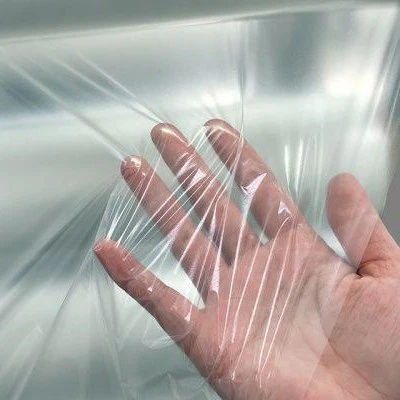
Let me start with the basics, because not everyone who reaches out to my office knows the difference between PU film and other plastic films. Put simply, PU film is a thin, flexible sheet made from polyurethane, a polymer that can be engineered to be soft or rigid, stretchy or tear-resistant, transparent or opaque—all with just tweaks to its chemical formula. That customizability is its superpower. Unlike polyethylene (PE) or polypropylene (PP) film, which have more fixed properties, PU film can be calibrated to meet very specific needs for almost any application you can think of. Over the years, I’ve seen it evolve from a niche industrial material to a solution that touches everything from medical equipment to fashion.
One of the most high-stakes, and least talked about, applications of PU film is in the medical industry. As a supplier, I’ve worked with wound care manufacturers for years, and PU film is the backbone of modern, advanced wound dressings. Here’s why: it’s semipermeable, meaning it lets oxygen and moisture vapor pass through to keep the wound moist and reduce the risk of infection, but it’s also impermeable to bacteria, dirt, and water—perfect for protecting surgical incisions, burns, or pressure ulcers that need time to heal without exposure to the outside world. We also supply PU film for medical device packaging, specifically for sterile barriers. Many surgical instruments are sealed in pouches made of medical-grade PU film, which is tough enough to withstand autoclaving (the high-heat steam process used to sterilize tools) and clear enough for clinicians to easily check that a tool is sterile without opening the packaging. A few years back, we even worked with a team making wearable glucose monitors—tiny sensors that sit under the skin to track blood sugar levels. The PU film used for those monitors has to be thin enough to not feel bulky, stretch with the skin, and block external contaminants that could throw off sensor readings. It’s a quiet workhorse in healthcare, and it’s one of the areas I’m most proud to supply, because we know the end product directly impacts patient outcomes.
Moving to a consumer category that’s close to my heart: footwear and apparel. For athletic brands, PU film is a game-changer for performance wear. I’ve had multiple sports shoe manufacturers come to me needing a material that’s lightweight, water-resistant, and breathable for running shoes, hiking boots, and even casual sneakers. PU film is often laminated to fabric to create a layer that keeps water out but lets sweat escape—way more flexible and comfortable than old-fashioned rubber coatings or heavy waterproof fabrics. It’s also used in functional apparel like rain jackets, ski pants, and workwear for people who spend long days outdoors. Beyond performance, PU film is huge in the faux leather (or vegan leather) industry, which has exploded in popularity over the last 15 years. Real leather is durable and soft, but it’s costly, can be inconsistent in quality, and isn’t sustainable for some consumers. PU film is the base material for most high-quality vegan leathers: you can emboss it to look like cowhide, grain leather, or even exotic skins like snake or alligator, and it’s resistant to scratches, fading, and cracking, making it a go-to for handbags, jackets, furniture upholstery, and car interiors. I supply PU film to several vegan leather manufacturers, and one thing I love is that we can custom-make it to have a soft, supple feel similar to real leather, so the end product doesn’t feel cheap or plastic-like to the touch.
Another application that’s grown steadily in recent years is industrial and packaging uses. A lot of people don’t realize that PU film is widely used in packaging for sensitive electronics, like semiconductors, circuit boards, and even lithium-ion batteries. Those components are extremely sensitive to moisture, dust, and static electricity—three things standard plastic packaging can’t always block. PU film can be formulated to be electrostatic discharge (ESD)-safe, meaning it doesn’t build up static that could fry delicate electronics, and it has a high barrier to water vapor, so it keeps components dry during shipping and storage. We also supply PU film for stretch wrapping in warehouses: industrial-grade PU film is more puncture-resistant than traditional stretch wrap, so it can hold heavy loads securely without tearing, even in cold temperatures where other films become brittle. For the construction industry, PU film is used as a vapor barrier and moisture control layer. When you build a house or commercial building, you need to prevent moisture from seeping into walls, which can cause mold and structural damage. PU film is often installed between the exterior sheathing and siding because it’s flexible enough to conform to uneven surfaces, durable enough to last the lifespan of a building, and lets air circulate to prevent trapped moisture.
I also can’t overlook the growing use of PU film in automotive and aerospace industries, where durability and weight matter above all else. In cars, PU film is used for interior trim, door panels, and dashboard components, because it’s scratch-resistant, UV-stable (so it doesn’t fade in sunlight), and can be molded into complex shapes. It’s also used for window films that block UV rays and reduce heat inside the car, lowering energy use from air conditioning. In aerospace, the demand for lightweight, high-performance materials is non-negotiable. PU film is used in aircraft interior components, like seat covers, and even in cabin insulation. It’s lighter than many metal or rubber alternatives, which helps reduce overall aircraft weight and improve fuel efficiency— a big priority for airlines as they work to cut costs and emissions.
Over my years as a PU film supplier, I’ve learned that the key to these applications isn’t just the material itself, but the customization. A medical-grade wound dressing PU film is nothing like a athletic shoe PU film, which is nothing like a battery packaging PU film. That’s why my team and I spend so much time working with clients to refine our products: we test for tensile strength, barrier properties, flexibility, UV resistance, and biocompatibility, depending on what the end product needs. I’ve had clients come to us with a challenge—say, a new type of hiking boot that needs a waterproof layer that’s even more breathable than existing options—and we tweak the PU film formula to get there. Some clients need large rolls of film for industrial use, others need thin, precise sheets for medical devices; we adapt, because that’s what our customers need.
I should also mention that the industry has come a long way in sustainability, which is a big concern for most businesses these days. A lot of people assume PU is non-recyclable, but modern PU films can be formulated to be recyclable, and we work with clients to source bio-based PU film made from renewable resources like vegetable oils, cutting reliance on fossil fuels. It’s not a perfect solution, but it’s a growing area of our business, and one I’m passionate about because we’re building materials that work for both performance and the planet.
At the end of the day, PU film is a material that’s often invisible, but it’s everywhere. It’s on the hospital bed next to you, on the shoes you laced up this morning, on the phone charger you use every day, and on the car you drive to work. For me, that’s the best part of my job: knowing that the product I supply helps make those everyday items better, safer, and more durable.

If you’re looking for a PU film supplier that can meet your specific needs, whether you’re in medical, footwear, packaging, construction, or any other industry that relies on this versatile material, my team and I are ready to discuss your requirements. We work with clients of all sizes, from small startups to large multinational corporations, and we’re happy to provide sample materials, technical specifications, and custom solutions tailored to your project. Feel free to reach out to our team to learn more and begin a conversation about your next project.
PA Hot Melt Adhesive Film References:
- “Polyurethane Film: Properties and Applications,” Polyurethane Manufacturers Association, 2022.
- Wound Care Product Design: Materials Science and Manufacturing, Woodhead Publishing, 2019.
- “Waterproof Breathable Fabrics: Technology and Performance,” Textile Progress, Vol. 52, No. 3, 2020.
- “Barrier Films for Electronic Packaging,” IEEE Transactions on Components, Packaging, and Manufacturing Technology, Vol. 11, No. 8, 2021.
- “Sustainable Polyurethane Materials: Current Trends and Future Directions,” Journal of Applied Polymer Science, Vol. 139, No. 24, 2022.
Yantai Leo Economics & Trade Co., Ltd.
Yantai Leo Economics & Trade Co., Ltd. is one of the most professional pu film manufacturers and suppliers in China, featured by quality products and low price. Please rest assured to wholesale customized pu film from our factory. Contact us for free sample.
Address: Zhichu Industrial Zone,Yantai City,Shandong Province,China.
E-mail: lee@leo-newmaterial.com
WebSite: https://www.leo-newmaterial.com/
