If you’ve ever stood on a manufacturing floor watching a batch of metal parts emerge from an annealing furnace, you know how critical that piece of equipment is to your bottom line. Annealing doesn’t just soften metal; it improves ductility, relieves internal stress, and sets the stage for consistent machining or forming processes. But here’s the part that many operators and plant managers don’t talk about until it’s too late: a furnace is only as reliable as the after-sales service that supports it. As someone who’s spent 12 years working with annealing furnace systems—first as a field technician, now as part of the supplier team—I’ve seen how rushed, generic after-sales support can turn a minor hiccup into a days-long production halt. Today, I want to break down exactly what annealing furnace after-sales service looks like, why it’s non-negotiable, and how our team approaches it for customers. Annealing Furnace
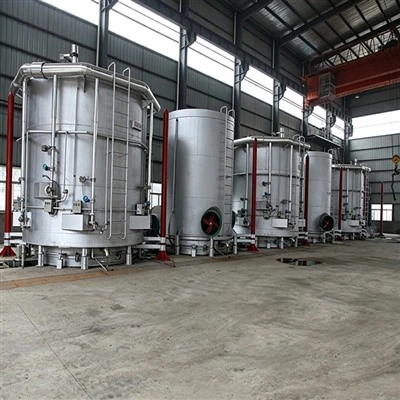
First, let’s ground this in what an annealing furnace’s needs actually are, because generic industrial equipment service doesn’t cut it here. Annealing furnaces aren’t one-size-fits-all; they’re tailored to your specific metal (steel, aluminum, brass, even specialty alloys), your batch size, and your required temperature profile. A furnace that operates at 1200°C for steel plate needs completely different care than one running at 350°C for aluminum extrusions. That specificity means after-sales service can’t be a call center script. It has to be designed around the unique way your furnace works.
Our after-sales support starts before you even need a repair—proactive maintenance, not just reactive fixes. Many plants treat service as a fire drill: you call when the furnace won’t heat up, and someone comes out. But that’s the equivalent of waiting for your car’s engine to seize before changing the oil. For an annealing furnace, the wear points are predictable: heating elements degrade over thousands of thermal cycles, thermocouples drift with heat exposure, door gaskets lose their seal and let in ambient air (which ruins the controlled atmosphere needed for clean annealing), and cooling fans seize if not regularly lubricated.
We structure our proactive services around two levels: scheduled routine checks and predictive monitoring. For routine checks, we work with each customer to build a custom calendar—monthly, quarterly, or semi-annual, depending on how many shifts your furnace runs. During a check, our technicians don’t just “look around”; they test the integrity of the controlled atmosphere (a big one for preventing oxidation on your parts), calibrate thermocouples to within 0.5°C accuracy (critical because even a 2°C swing can over-soften or under-anneal metal), inspect heating element terminals for arcing, and test the emergency cool-down system. Last year, we caught a frayed heating element wire during a quarterly check for a automotive parts plant in Detroit; if it had failed mid-batch, they would have lost 2,000 worth of raw aluminum and missed a delivery to a major OEM. That’s the value of proactive service.
Predictive monitoring is another piece we invest in, because modern annealing furnaces have built-in sensors that track temperature, pressure, and energy use 24/7. Our team can set up custom alerts for your furnace’s specific thresholds—say, if a heating element’s resistance rises by 10%, that’s a sign it’s near the end of its life. We can review your sensor data weekly (or on-demand, if you prefer) to flag issues before they cause downtime. I remember a job shop in Chicago that had our predictive monitoring set up; we noticed a thermocouple drift on a Tuesday afternoon, called their maintenance team, and they swapped it out during a shift change. If we hadn’t caught that, their night shift production would have run parts with incorrect hardness, leading to a full reject batch.
When something does go wrong, reactive service has to be fast, and not just in terms of response time—we know that for most manufacturing operations, downtime costs thousands of dollars per hour, so our technician dispatch is tiered. For critical systems (like furnaces running 24/7 for aerospace or medical parts), we offer on-site service within 48 hours, sometimes even 24 hours, depending on your location. For non-critical shifts, we can often send a technician within 72 hours. But speed isn’t enough; our technicians are factory-trained specifically on the annealing furnaces we design. I’ve seen other vendors send a generic industrial equipment tech who couldn’t tell the difference between a mesh-belt annealing furnace and a bell-type one, leading to a wrong part being installed and more downtime. All our field techs go through 6 months of specialized training on our equipment, including time on the production floor assembling furnaces, so they know every component inside and out. We also maintain a stocked parts depot with all common replacement parts—heating elements, thermocouples, gaskets, control panels—so we don’t have to wait for a part to ship from overseas. Last quarter, we had a customer in Toronto whose furnace control board failed; our tech drove 3 hours from our regional depot, swapped the board in under 90 minutes, and had them back to production without losing a shift.
Another often-overlooked part of after-sales service for annealing furnaces is operator training. It doesn’t matter how good your maintenance is if the people running the furnace don’t know how to use it correctly. Improper loading of parts, wrong temperature setpoints, or ignoring warning alerts are top causes of unnecessary downtime. We don’t just hand over a manual when your furnace is installed; we offer hands-on training for your operators, shift supervisors, and maintenance team. The training covers everything from setting the correct annealing cycle for your specific metal, to troubleshooting basic issues (like a minor door seal leak) on their own, to interpreting the furnace’s control system alerts. Last year, a job shop in Cleveland had an issue where their furnace was cycling on and off constantly; their operators had never been trained to check the air filter, so they thought it was a major control system failure. After our training, they now check the filter monthly and caught the issue themselves before it required a service call.
We also offer long-term service contracts that are tailored to your needs, not a one-size-fits-all package. Some customers want all-inclusive coverage that includes all routine maintenance, parts, and emergency service for a fixed annual fee, so they don’t have to budget for unexpected repairs. Others want a la carte service, only calling us when they have an issue. For high-volume operations, we can even provide a dedicated service technician who works out of your facility, building a deep understanding of your furnace’s quirks and your production schedule. That consistency is a big win—no more waiting for a random tech to show up, no more repeating the same details about your furnace every time you call.
Wait, let’s pause here to address a common question we get: “Why can’t I just get a local technician to service my annealing furnace?” The short answer is, you can, but they won’t have the same level of specialized knowledge. Annealing furnaces operate in a controlled atmosphere (often nitrogen, argon, or a mix) to prevent surface oxidation, and a local tech might accidentally introduce oxygen during a repair, ruining a batch of parts. Or they might use a generic heating element that isn’t rated for the thermal cycles your furnace runs, leading to premature failure. We’ve seen customers try this and end up with more issues than they started with—one customer in Pittsburgh swapped a thermocouple with a generic part that read 5°C higher than the furnace’s actual temperature, leading to parts that were too soft and had to be re-annealed, costing them $15,000 in scrap. That’s the kind of avoidable mistake that specialized after-sales service prevents.
Another aspect we prioritize is spare parts availability and compatibility. When you work with our team, all replacement parts are original equipment manufacturer (OEM) parts designed specifically for your furnace. Generic parts might cost less upfront, but they’re often not engineered to handle the same thermal stress or atmosphere requirements. We keep a 98% inventory rate for common parts across all our regional depots, so we can ship a replacement part overnight if needed. For older furnaces—we’ve been making annealing systems for over 30 years—we still manufacture replacement parts, so you don’t have to replace a perfectly good furnace just because a part is obsolete. We had a customer with a 20-year-old bell-type annealing furnace last year; instead of replacing it, we manufactured a custom replacement heating element for a fraction of the cost of a new unit, and it’s still running reliably.
Beyond repairs and maintenance, our after-sales team is a resource for process improvement. Annealing is as much a process as it is a equipment function, and small adjustments can save you energy, reduce scrap, and speed up production. We’ll work with your engineers to review your annealing cycles, suggest tweaks to temperature hold times or cooling rates, or even recommend a minor upgrade to your control system that improves efficiency. Last year, a aluminum extrusion plant in Mexico was running their annealing cycles 2 hours longer than necessary, leading to higher energy costs. Our team reviewed their furnace data, adjusted the temperature ramp rate, and cut the cycle time by 45 minutes per batch—saving them over $80,000 a year in energy costs, with no impact on part quality. That’s the kind of value that goes beyond just “fixing the furnace.”
I want to be clear: we’re not a big corporate vendor with a scripted approach. Our team is made up of former field technicians, process engineers, and customer support reps who understand that your furnace is the backbone of your production. We’ve all been on the floor at 2 a.m. when a furnace breaks down, listening to our customers panic about missing a deadline, and that experience shapes how we deliver service. We don’t just want to sell you a furnace—we want to be your long-term partner, so when something goes wrong, you call us and know we’ll show up with the right part, the right expertise, and a plan to get you back to production as fast as possible.
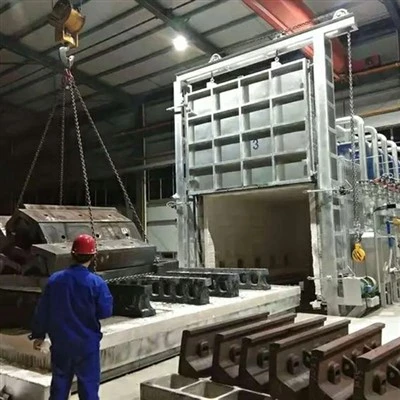
If you’re in the market for an annealing furnace, or you’re looking to upgrade your current after-sales support, we’re here to help. We can walk you through the specific service plans tailored to your operation, answer any questions about maintenance, repairs, or process improvements, and work with you to find a solution that fits your budget and production needs. To learn more and discuss how our annealing furnace after-sales service can support your business, get in touch with our team to schedule a no-obligation consultation.
Tempering Furnace References
- ASM International. (2019). Thermally Controlled Processing of Metals: Annealing Furnace Operation and Maintenance. Materials Park, OH: ASM International.
- Manufacturing Extension Partnership (MEP). (2022). Reducing Downtime in Industrial Furnace Systems: Proactive Maintenance Best Practices. National Institute of Standards and Technology.
- Industrial Heating Magazine. (2021). The Role of Specialized After-Sales Service in Extending Annealing Furnace Lifespan. BNP Media.
- Society of Manufacturing Engineers (SME). (2020). Operator Training for Industrial Heat Treatment Equipment. Dearborn, MI: SME.
- International Organization for Standardization (ISO). (2018). ISO 13732: Heat Treatment Furnaces – Safety Requirements for Design, Construction, and Maintenance. Geneva, Switzerland: ISO.
Jiangsu Fangwei Furnace Industry Co., Ltd.
Jiangsu Fangwei Furnace Industry Co., Ltd. is one of the most professional annealing furnace manufacturers and suppliers in China. With abundant experience, we are committed to providing high quality customized products with competitive price. Please feel free to buy advanced annealing furnace made in China here from our factory.
Address: No.168, HuangNian Bridge, DaoShu Town, Danyang City, JiangSu Province, China
E-mail: fangwei@fwfurnaces.com
WebSite: https://www.fwfurnaces.com/
