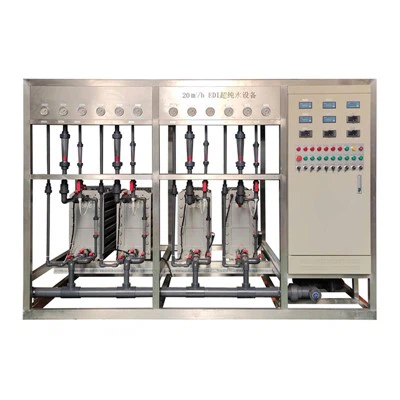
As a seasoned provider of Ion Exchange Equipment, I’ve witnessed firsthand the profound impact of resin cross – linking degree on the performance of our equipment. In this blog, I’ll delve into the intricate relationship between resin cross – linking degree and equipment performance, sharing insights from my years of experience in the industry. Ion Exchange Equipment
Understanding Resin Cross – Linking
Resin cross – linking refers to the chemical bonds that connect polymer chains in an ion – exchange resin. These bonds play a crucial role in determining the physical and chemical properties of the resin. The cross – linking degree is typically expressed as a percentage, indicating the proportion of cross – linking agents in the resin synthesis. For example, a resin with a high cross – linking degree might have 8% or more of cross – linking agents, while a low – cross – linked resin could have less than 2%.
The cross – linking process is a carefully controlled chemical reaction. During resin synthesis, monomers are polymerized, and the cross – linking agents are added to form a three – dimensional network structure. This structure gives the resin its unique characteristics, which in turn affect the performance of ion – exchange equipment.
Impact on Physical Properties
Swelling and Shrinkage
One of the most significant effects of resin cross – linking degree is on the swelling and shrinkage behavior of the resin. Low – cross – linked resins tend to swell more in solution compared to high – cross – linked resins. This is because the less – rigid network structure of low – cross – linked resins allows more solvent molecules to penetrate and expand the polymer chains.
In ion – exchange equipment, excessive swelling can lead to several problems. It can cause resin beads to pack more tightly, increasing the pressure drop across the resin bed. This not only requires more energy to pump the solution through the equipment but can also lead to physical damage to the resin beads over time. On the other hand, high – cross – linked resins with minimal swelling are more stable in terms of bed volume, reducing the risk of operational issues related to pressure drops.
Mechanical Strength
Resin cross – linking degree also has a direct impact on the mechanical strength of the resin beads. High – cross – linked resins have a more rigid and robust structure due to the higher density of cross – links. This makes them more resistant to mechanical stress, such as the forces exerted during backwashing and regeneration processes in ion – exchange equipment.
In contrast, low – cross – linked resins are more fragile. They are prone to breakage under high – flow conditions or aggressive backwashing, which can lead to the generation of fines. These fines can clog the equipment and reduce its efficiency. For example, in a large – scale water treatment plant, the presence of resin fines can cause blockages in the distribution system, leading to uneven flow and reduced treatment capacity.
Impact on Chemical Properties
Exchange Capacity
The cross – linking degree of resin affects its ion – exchange capacity. Low – cross – linked resins generally have a higher exchange capacity because their more open structure allows for easier access of ions to the active exchange sites. However, this comes with a trade – off. The increased porosity also means that the ions can be more weakly bound to the resin, and the exchange process may be less selective.
High – cross – linked resins, while having a lower overall exchange capacity, offer better selectivity. The more restricted pore structure allows them to discriminate more effectively between different ions based on their size and charge. This is particularly important in applications where the removal of specific ions is required, such as in the purification of pharmaceutical products or the recovery of precious metals.
Kinetics of Ion Exchange
The cross – linking degree also influences the kinetics of the ion – exchange process. In low – cross – linked resins, the diffusion of ions within the resin beads is faster due to the larger pore size and more open structure. This results in a quicker ion – exchange reaction, which can be advantageous in applications where a high – flow rate is required.
Conversely, high – cross – linked resins have slower ion – diffusion rates. The tightly cross – linked network restricts the movement of ions, leading to a longer reaction time. However, this can be beneficial in some cases, such as in processes where a more controlled and gradual exchange is desired.
Implications for Equipment Performance
Efficiency and Throughput
The physical and chemical properties of the resin directly impact the efficiency and throughput of ion – exchange equipment. For applications that require high – volume processing, such as municipal water treatment, low – cross – linked resins may be preferred due to their higher exchange capacity and faster reaction kinetics. This allows the equipment to handle larger volumes of water in a shorter period.
However, in industries where the quality of the purified product is of utmost importance, such as the semiconductor industry, high – cross – linked resins are often used. The better selectivity and stability of high – cross – linked resins ensure that even trace contaminants are removed effectively, despite the potentially lower throughput.
Maintenance and Lifespan
The choice of resin cross – linking degree can also affect the maintenance requirements and lifespan of ion – exchange equipment. Low – cross – linked resins, due to their fragility and swelling issues, may require more frequent maintenance, such as resin replacement or backwashing adjustments. This can increase the overall operational cost of the equipment.
High – cross – linked resins, with their superior mechanical strength and stability, tend to have a longer lifespan. They require less frequent replacement and are less likely to cause operational problems, resulting in lower long – term maintenance costs.
Selecting the Right Resin for Your Equipment
Selecting the appropriate resin cross – linking degree for ion – exchange equipment is a critical decision. It depends on a variety of factors, including the specific application, the quality of the feed solution, the required throughput, and the budget.
For general water softening applications, a medium – cross – linked resin may be a good choice. It offers a balance between exchange capacity, mechanical strength, and cost. In contrast, for specialized applications like radioactive waste treatment, high – cross – linked resins are often necessary to ensure the efficient removal of specific ions and the long – term stability of the equipment.
Contact Us for Your Ion – Exchange Equipment Needs
As an experienced Ion Exchange Equipment supplier, I understand the importance of choosing the right resin for your specific application. Whether you need to purify water, recover valuable metals, or remove pollutants, our team of experts can help you select the optimal resin cross – linking degree and design a customized ion – exchange system.
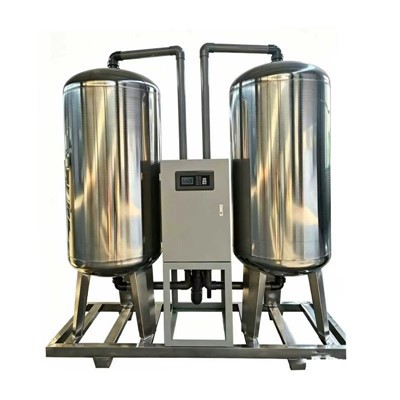
We offer a wide range of ion – exchange equipment, including columns, tanks, and control systems, all designed to meet the highest industry standards. Our commitment to quality and customer satisfaction has made us a trusted partner for numerous industries around the world.
SWRO & BWRO Equipment If you’re interested in learning more about our ion – exchange solutions or would like to discuss a specific project, please don’t hesitate to contact us. We’d be delighted to work with you to achieve your purification goals.
References
- Helfferich, F. (1962). Ion Exchange. McGraw – Hill Book Company.
- Kunin, R. (1958). Ion – Exchange Resins. John Wiley & Sons.
- Dorfner, K. (1991). Ion Exchangers: Properties and Applications. Walter de Gruyter.
Shandong Yanuo Environmental Protection Equipment Co., Ltd.
We’re well-known as one of the leading ion exchange equipment manufacturers and suppliers in China, featured by quality products and good price. Please rest assured to buy bulk ion exchange equipment made in China here from our factory. Customized orders are welcome.
Address: North Side of the Road, 1,000 Meters West of the Intersection of Fenghuangshan West Road and Provincial Highway S102, Wangfu Subdistrict, Qingzhou City, Weifang City, Shandong Province.
E-mail: ynhb.499973983@gmail.com
WebSite: https://www.zkyaruo.com/
