How to improve the color fastness of the prints from a water – based digital inkjet printer?
As a supplier of water – based digital inkjet printers, I have witnessed the increasing demand for high – quality prints with excellent color fastness. Color fastness is a crucial factor that determines the longevity and visual appeal of printed materials. In this blog post, I will share some effective strategies to improve the color fastness of prints from water – based digital inkjet printers. Water-based Digital Inkjet Printer

Understanding the Basics of Water – Based Digital Inkjet Printing
Before diving into the methods of improving color fastness, it is essential to understand how water – based digital inkjet printing works. Water – based inks are environmentally friendly as they contain a high percentage of water and fewer volatile organic compounds (VOCs) compared to solvent – based inks. These inks are ejected through tiny nozzles in the printer head onto the printing substrate. The ink droplets are then absorbed into the substrate or adhere to its surface, forming the desired image.
However, one of the challenges with water – based inks is their relatively lower color fastness compared to some other ink types. This is because the pigments or dyes in the ink can be more easily affected by factors such as water, light, and friction.
Choosing the Right Printing Substrate
The choice of printing substrate is one of the most important factors that can affect the color fastness of prints. Different substrates have different absorption and adhesion properties, which can significantly impact how well the ink bonds to the material.
- Coated Papers and Fabrics: Coated substrates are specially designed to improve ink absorption and adhesion. They have a thin layer of coating that helps the ink to dry quickly and form a more stable bond with the substrate. For example, coated photo papers have a smooth surface that allows the ink to spread evenly, resulting in vibrant and long – lasting prints. Similarly, coated fabrics can enhance the color fastness of textile prints.
- Substrate Compatibility: It is crucial to ensure that the printing substrate is compatible with the water – based ink used in the printer. Some substrates may interact negatively with the ink, causing issues such as bleeding, poor adhesion, or reduced color fastness. Always test the substrate with the ink before large – scale printing to ensure optimal results.
Optimizing Ink Formulation
The formulation of the water – based ink plays a vital role in determining the color fastness of the prints. Here are some aspects to consider when optimizing the ink formulation:
- Pigment or Dye Selection: Pigments are generally more light – fast and water – resistant than dyes. Pigment – based inks contain solid particles of colorants that are suspended in the ink. These particles are less likely to fade or bleed compared to dyes, which are dissolved in the ink. When selecting an ink, choose one with high – quality pigments that have good lightfastness and chemical stability.
- Additives: Additives can be incorporated into the ink formulation to improve its performance. For example, UV absorbers can be added to protect the ink from the damaging effects of ultraviolet light, which can cause color fading. Wetting agents can improve the ink’s ability to spread evenly on the substrate, enhancing the overall print quality and color fastness.
Adjusting Printing Parameters
Proper adjustment of printing parameters is essential for achieving good color fastness. Here are some key parameters to consider:
- Print Resolution: Higher print resolution generally results in better color accuracy and more detailed prints. However, it can also affect the drying time of the ink. If the ink does not dry properly, it may be more prone to smudging and color fading. Find the optimal print resolution that balances print quality and drying time.
- Ink Density: The amount of ink applied to the substrate, known as ink density, can also impact color fastness. If the ink density is too high, the ink may not dry completely, leading to poor adhesion and color bleeding. On the other hand, if the ink density is too low, the colors may appear dull and lack vibrancy. Experiment with different ink densities to find the best setting for your specific printing application.
- Drying Conditions: Proper drying of the prints is crucial for improving color fastness. After printing, the prints should be dried at the appropriate temperature and humidity. High – temperature drying can help the ink to bond more firmly with the substrate, but it should not be so high that it damages the substrate or causes the ink to degrade. Some printers may have built – in drying mechanisms, or additional drying equipment can be used.
Post – Printing Treatments
Post – printing treatments can further enhance the color fastness of the prints. Here are some common post – printing treatments:
- Heat Pressing: Heat pressing can be used to improve the adhesion of the ink to the substrate. By applying heat and pressure, the ink is forced deeper into the substrate, creating a more permanent bond. This treatment is particularly effective for textile prints. However, it is important to use the correct temperature and pressure settings to avoid damaging the substrate.
- Laminating: Laminating the prints with a protective film can provide an additional layer of protection against water, light, and abrasion. There are different types of laminating films available, such as gloss, matte, and UV – resistant films. Choose the appropriate film based on the specific requirements of your prints.
Quality Control and Testing
Regular quality control and testing are essential to ensure that the prints meet the desired color fastness standards. Here are some testing methods that can be used:
- Lightfastness Testing: This test measures how well the prints resist fading when exposed to light. The prints are placed under a light source for a specified period, and the color change is evaluated. There are standardized testing methods available, such as the ISO 105 – B02 test for textiles.
- Wash Fastness Testing: For textile prints, wash fastness testing is crucial. The prints are washed under specific conditions, and the color change, staining, and loss of ink are evaluated. This test helps to determine how well the prints will withstand repeated washing.
Conclusion
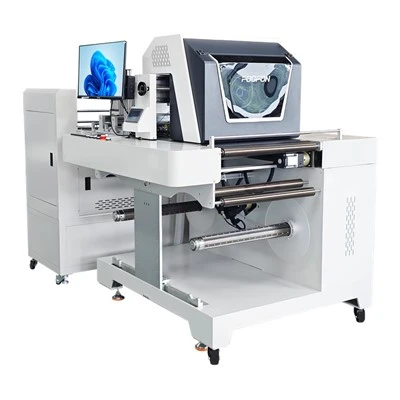
Improving the color fastness of prints from water – based digital inkjet printers requires a comprehensive approach that involves choosing the right printing substrate, optimizing ink formulation, adjusting printing parameters, applying post – printing treatments, and conducting quality control and testing. As a water – based digital inkjet printer supplier, we are committed to providing our customers with the knowledge and resources to achieve high – quality, long – lasting prints.
Standard Single Pass Printer If you are interested in learning more about our water – based digital inkjet printers or need assistance in improving the color fastness of your prints, we welcome you to contact us for a procurement discussion. Our team of experts is ready to help you find the best solutions for your printing needs.
References
- ISO 105 – B02: Textiles – Tests for colour fastness – Part B02: Colour fastness to artificial light: Xenon arc fading lamp test.
- Handbook of Digital Printing by Frank Romano.
- Inkjet Printing: Principles and Practice by Paul F. Smith.
Chengdu Kelier Electronic Co., Ltd.
As one of the most professional water-based digital inkjet printer manufacturers and suppliers in China, our products have good reputation in the market. Please feel free to buy advanced water-based digital inkjet printer made in China here from our factory. We also accept customized orders.
Address: Unit 1302, 13th Floor, Building 1, Unit 2, No. 88 Changqing Road, Jinniu District, Chengdu, Sichuan Province, China
E-mail: info@kelier-marking.com
WebSite: https://www.kelier-printer.com/
