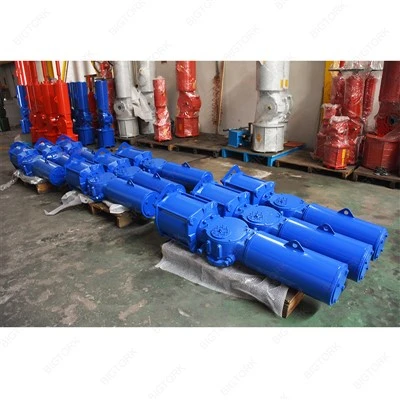
When dealing with pneumatic actuators in a corrosive environment, the choice of materials is crucial. As a pneumatic actuator vendor with extensive experience in the industry, I understand the challenges and requirements of operating in such harsh conditions. In this blog post, I will explore various materials suitable for pneumatic actuators in corrosive environments, discussing their properties, advantages, and limitations. Pneumatic Actuator
Stainless Steel: The Workhorse of Corrosion Resistance
Stainless steel is one of the most commonly used materials for pneumatic actuators in corrosive environments. It offers excellent corrosion resistance, high strength, and good durability. The chromium content in stainless steel forms a passive oxide layer on the surface, which protects the underlying metal from corrosion. This layer is self – healing, meaning that if it is damaged, it can reform in the presence of oxygen.
There are different grades of stainless steel, with 304 and 316 being the most popular. Type 304 stainless steel contains 18% chromium and 8% nickel and is suitable for many general corrosive applications. It provides good resistance to atmospheric corrosion, as well as to a variety of mild chemical environments.
For more aggressive corrosive conditions, Type 316 stainless steel is often preferred. It contains molybdenum, which enhances its resistance to pitting and crevice corrosion in chloride – containing environments. This makes it ideal for use in marine applications, chemical processing plants, and food processing industries where exposure to salt water or acidic solutions is common.
However, stainless steel is not without its limitations. In highly acidic or alkaline environments, or in the presence of certain aggressive chemicals, even the best grades of stainless steel can experience corrosion. Also, the cost of stainless steel can be relatively high, which may be a factor in some budget – sensitive projects.
Aluminum Alloys: Lightweight and Corrosion – Resistant
Aluminum alloys are another popular choice for pneumatic actuators due to their lightweight nature and good corrosion resistance. Aluminum forms a thin, protective oxide layer on its surface when exposed to air, which helps prevent further corrosion.
Alloy 6061 is a common choice for pneumatic actuator components. It has a good strength – to – weight ratio, is easy to machine, and offers fair corrosion resistance. It can be further enhanced with anodizing, a process that thickens the natural oxide layer, providing better protection against corrosion. Anodized aluminum 6061 can withstand exposure to mild acids, alkalis, and some industrial atmospheres.
The main advantage of aluminum alloys is their low weight, which can be beneficial in applications where reducing the overall weight of the system is crucial, such as in aerospace or portable equipment. However, aluminum alloys are generally not as corrosion – resistant as stainless steel in highly aggressive environments. They can be susceptible to pitting and galvanic corrosion, especially when in contact with more noble metals in the presence of an electrolyte.
Plastic Polymers: Chemical Resistance and Cost – Effectiveness
Plastic polymers offer a range of benefits for pneumatic actuators in corrosive environments. They are highly resistant to many chemicals, lightweight, and often cost – effective compared to metal materials.
Polyvinyl chloride (PVC) is a well – known plastic that is resistant to a variety of acids, alkalis, and salts. It is commonly used in water treatment applications and for handling non – aggressive chemicals. PVC is relatively inexpensive and easy to fabricate, making it a popular choice for low – cost pneumatic actuator components.
Polypropylene (PP) is another polymer with good chemical resistance. It has a high melting point and is resistant to many organic solvents, acids, and alkalis. PP is often used in the chemical and food industries, where it can withstand harsh cleaning agents and corrosive substances.
Fluoropolymers, such as polytetrafluoroethylene (PTFE), offer the highest level of chemical resistance among plastics. PTFE is inert to almost all chemicals, has a low coefficient of friction, and excellent weatherability. It is often used in seals and gaskets for pneumatic actuators operating in extremely corrosive environments, such as in the petrochemical and pharmaceutical industries.
However, plastic polymers also have some drawbacks. They generally have lower mechanical strength compared to metals, which may limit their use in high – load applications. They can also be sensitive to high temperatures and some plastics may experience creep or deformation over time under constant stress.
Titanium: High – Performance Corrosion Resistance
Titanium is a high – performance material with outstanding corrosion resistance. It has a very high strength – to – weight ratio and forms a stable, passive oxide layer on its surface, similar to stainless steel, but more resistant to a wider range of aggressive environments.
Titanium is highly resistant to corrosion in seawater, chlorinated solutions, and many acids and alkalis. This makes it suitable for demanding applications, such as in offshore oil and gas platforms, desalination plants, and chemical processing facilities where exposure to highly corrosive substances is inevitable.
Despite its excellent properties, titanium is relatively expensive compared to other materials. The high cost is mainly due to its difficult extraction and processing. Additionally, titanium requires special handling during machining and welding to prevent contamination and ensure its performance.
Considerations for Material Selection
When selecting the appropriate material for a pneumatic actuator in a corrosive environment, several factors need to be considered:
- Nature of the Corrosive Agent: Identify the specific chemicals, gases, or liquids that the actuator will be exposed to. Different materials have different resistance profiles to various corrosive agents. For example, a system exposed to sulfuric acid will require a different material than one exposed to saltwater.
- Temperature and Pressure: The operating temperature and pressure also affect the choice of material. Some materials may lose their corrosion resistance or mechanical properties at high temperatures or under high pressure. For instance, plastics may soften or deform under high – temperature conditions, while metals may experience increased corrosion rates.
- Mechanical Requirements: Determine the mechanical loads and stresses that the actuator will be subjected to. High – load applications may require materials with high strength, such as stainless steel or titanium, while low – load applications can use lighter and less strong materials like plastics or aluminum alloys.
- Cost: Cost is always a significant factor in any project. While high – performance materials like titanium offer excellent corrosion resistance, they may not be feasible for budget – limited projects. Materials like PVC or aluminum alloys can provide a more cost – effective solution for less severe corrosive environments.
Conclusion
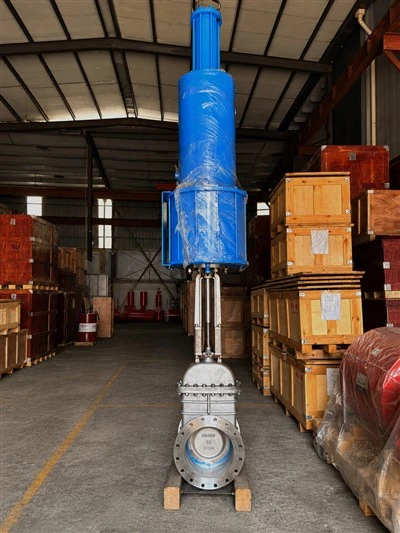
In conclusion, choosing the right material for pneumatic actuators in a corrosive environment is essential to ensure their long – term performance and reliability. Stainless steel, aluminum alloys, plastic polymers, and titanium each have their unique properties, advantages, and limitations. As a pneumatic actuator provider, I can help you evaluate your specific requirements and recommend the most suitable material for your application.
Pneumatic Rotary Actuator If you are facing challenges in selecting the right pneumatic actuator materials for a corrosive environment, or if you are interested in purchasing our high – quality pneumatic actuators, please feel free to connect with us. Our team of experts is ready to assist you in finding the best solutions for your needs.
References
- ASM Handbook Volume 13A: Corrosion: Fundamentals, Testing, and Protection. ASM International.
- Perry’s Chemical Engineers’ Handbook. McGraw – Hill Education.
- "Materials Selection in Mechanical Design" by Michael F. Ashby. Butterworth – Heinemann.
Zhejiang Bigtork Valve Automation Co., Ltd.
Zhejiang Bigtork Valve Automation Co., Ltd. is one of the leading pneumatic actuator manufacturers and suppliers in China. We warmly welcome you to buy customized pneumatic actuator at competitive price from our factory. Contact us for more details.
Address: 98 Yuanqu Avenue,Anfeng Industrial Zone,Oubei,Yongjia,Zhejiang,China.
E-mail: sales@bigtork.com
WebSite: https://www.bigtork.com/
