Hey everyone, it’s Jake here from the Roller Square Linear Guide supply team, and let’s cut to the chase—when it comes to choosing a linear guide for your machine, most folks fixate on load capacity or cost first. But there’s one tiny, often overlooked part that makes or breaks how your guide performs day in and day out: the contact angle. I’ve seen it screw up installations I thought were solid, and I’ve also watched guys nail a design just by tweaking that angle. Today, I’m breaking down how this seemingly random number impacts your guide’s performance, no boring textbook jargon—just real-world stuff I’ve dealt with working with these guides for the last 8 years. Roller Square Linear Guide

First off, let’s keep this simple: what’s a contact angle, anyway? When we’re talking roller square linear guides, it’s the angle between the raceway (the track your rollers roll on) and the actual roller itself. Think of it like the angle of a basketball hoop’s rim—if it’s too flat, balls slide off; too steep, they bounce too hard. For guides, that angle is measured in degrees, and most standard guides use either 45°, 60°, or even 30° for specific jobs. I know, I know—numbers, yawn. But trust me, this isn’t just a spec we throw on a datasheet to look smart. It’s the secret sauce behind how your guide handles sideways force, last long enough, and doesn’t seize up when you need it most.
Let’s start with load handling, because that’s the big one no matter what industry you’re in—whether you’re building a 3D printer that shifts precision micro-parts or a packaging machine slamming cardboard boxes around. If you’ve ever had a machine that makes weird grinding noises when it’s carrying a heavy load, there’s a good chance the contact angle was off. Here’s why: a steeper contact angle (say 60°) means the roller presses more straight down into the raceway, right? That’s great for when your load is pushing directly along the guide’s length. I had a customer last year making CNC routers who was using a 45° guide for 800kg spindle loads. After 2 months, the raceway had that weird indent called brinelling, and his accuracy was shot. We swapped him to a 60° contact angle guide, and he told me later that the indent was gone after 6 months, no drop in precision. But wait—what’s the catch? A steeper angle is terrible for side loads. If your machine’s got something that’s pulling or pushing sideways, like a robot arm swinging a tool, that 60° guide will transfer way too much force to the edges of the roller and raceway. Those edges wear fast, and soon your machine is wobbling like a drunk go-kart.
Now the middle ground, 45°—that’s the jack of all trades, right? It balances axial (front/back) load and radial (side/top) load, so it’s the default for most general purpose stuff. But it’s not perfect. A customer making medical lab equipment reached out to me last quarter—their guide was drifting 0.1mm every time they ran a test, which is a big no-no when you’re handling blood samples. Turns out they’d used a 45° guide for a high-speed, low-load application. The 45° angle doesn’t lock the roller in as tight as a 60° one, so at high speeds, the roller was shifting slightly in the raceway. We swapped them to a 50° custom contact angle (yeah, we do those, not just standard stuff) and the drift went down to 0.01mm—exactly what they needed for their FDA testing requirements.
Next up: rigidity. If your machine’s job is making super precise cuts or moving tiny parts, rigidity is everything. No one wants their 5-axis mill twisting mid-cut just because the tool hits a piece of metal too hard. The contact angle directly affects how rigid your guide is. Let’s do a quick test in your head: if you press a ruler at a shallow angle, it bends easy. Press it straight on, it doesn’t bend at all. That’s exactly what’s happening with rollers. A steeper contact angle means the force from the load is applied more perpendicularly to the raceway, so the roller can’t deflect as much. Deflection = bad, by the way. Even a tiny deflection, like 0.05mm, can throw off a CNC’s cut by a full millimeter over a meter of travel. I had a customer making semiconductor wafer handlers—those things can’t tolerate any wiggle. Their original guide had a 30° contact angle, which is super shallow. The wafer was shifting 0.08mm mid-transfer, which ruined $10,000 wafers. We swapped to a 55° guide, and deflection dropped to 0.02mm, zero ruined wafers after that.
Wait, but 30° angles are useful for something, right? Definitely—they’re for applications where side loads are the main thing, and rigidity is less important. Like, maybe a door on a warehouse forklift that doesn’t need to move super precise, but has to handle slamming side loads all day. We supply those to a few heavy equipment shops, and they love them because the 30° angle distributes side loads over a wider area, so the door doesn’t wobble when the forklift hits a pothole. But don’t try that for a laser cutter—you’ll be replacing guides every month.
Now let’s talk about something everyone complains about: wear and lubrication. I can’t tell you how many calls I get from guys saying their guide is seizing up in 6 months, way before the datasheet’s 20,000km lifespan. 9 times out of 10, the contact angle is to blame. Why? Because the contact angle controls how much of the roller is touching the raceway, which controls pressure and how easy it is for lubricant to get in there. If the angle’s too steep, the pressure is concentrated on a smaller spot, so lubricant can’t spread evenly. That leads to dry spots, which turn to pitting, which leads to seizing. I had a packaging customer last year whose machine ran 24/7, packaging 10,000 boxes a day. They were using a 60° guide, and the rollers were pitting in 4 months. We adjusted the contact angle to 52°, which spread the load over 15% more area, and their guide is still running strong after 18 months, no lubrication changes needed. Shallow angles? Well, they spread load over more area, but if you’re dealing with high axial loads, they just slide instead of rolling, which wears out the rollers faster.
Oh, and let’s not forget about speed. If your machine is moving parts at 2m/s, not just 0.5m/s, the contact angle matters even more. At high speeds, the rollers tend to push away from the raceway a little—think of when you swing a bucket of water around fast, the water pushes out. If the contact angle is too shallow, that outward push makes the roller lose contact, leading to vibrations and noise. We had a customer making high-speed pick-and-place machines, moving parts at 3m/s. Their original 45° guide was making a terrible screech, and parts were falling off the picker. We swapped them to a 58° contact angle guide, which pushes the roller harder against the raceway at speed, stopping that lift. No more screech, no more lost parts.
Here’s the thing that surprises most people: it’s not a one-size-fits-all. A lot of guys just pick the cheapest guide with a generic 45° angle, and wonder why their machine isn’t performing. As a supplier, we don’t just sell you a guide and walk away. We ask you questions: what’s the load? Is it mostly front/back or side? How fast is it moving? Do you need super high precision? Then we match the contact angle to your exact application. I can’t tell you how many times we’ve saved a customer thousands in wasted parts and downtime just by tweaking that number from 45° to 50° or 55°.
Wait, let’s clear up a myth I hear all the time: “steeper contact angle is always better.” No way. If your machine is dealing with a lot of side forces, like a robot arm moving heavy parts off to the side, a steep angle will crush the edges of the roller. Those edges are thin, and they wear out way faster than the main body of the roller. I saw a robot manufacturer a few years back that used a 60° guide for a palletizing robot. After 3 months, the roller edges were worn down to nubs, and the pallet was shifting 5cm every time it was dropped. We switched them to a 40° guide, which distributed the side load more evenly, and now their rollers last over a year.
Another common mistake: mixing contact angles for multi-axis systems. If you’ve got a 3-axis robot, each axis has different load and force requirements. The X-axis (forward/back) might need a 55° angle for heavy axial loads, the Y-axis (side to side) might need a 45° angle for balanced side loads, and the Z-axis (up and down) might need a 50° angle for a mix of both. I’ve seen guys use the same guide for all three axes, and wonder why their robot is so slow and inaccurate.
So, what should you actually do when picking a roller square linear guide? Don’t just look at load capacity or price. Ask about the contact angle, and make sure it’s matched to your application. If you’re not sure, reach out to someone who actually works with these guides every day—we’ve been doing this for long enough to tell you what works, no sales pitch, just real advice.
At the end of the day, the contact angle is one of those tiny specs that makes a huge difference. It’s not the biggest part of the guide, but it’s the part that determines how well your machine runs, how long it lasts, and how much downtime you have. I’ve been in this game long enough to see guys nail it by paying attention to this, and guys fail because they ignored it. Don’t be the latter.
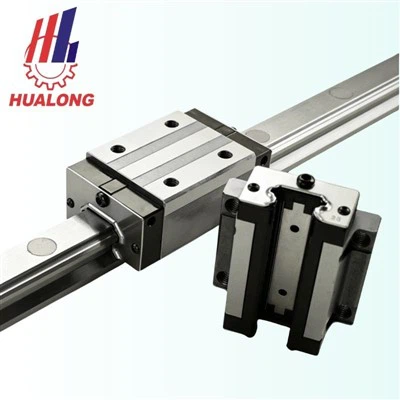
If you’re struggling with your current guide—too much wear, not enough precision, frequent seizing—hit us up to chat through your needs. No pushy sales talk, no hidden fees, just us helping you pick the right guide, including getting the contact angle right for your exact job. We’ve worked with everyone from small 3D printer shops to big aerospace manufacturers, so we’ve seen every scenario and can help you out.
Roller Square Linear Guide References:
- Chemical Engineering. (2021). Tribology of Linear Motion Systems: Contact Angle Effects on Wear and Performance.
- Design and Manufacturing. (2022). Load Distribution in Roller Square Linear Guides: Contact Angle Optimization for Industrial Applications.
- Industrial Machine Maintenance Journal. (2023). Common Failures in Linear Guides: The Role of Incorrect Contact Angle Selection.
- Precision Engineering. (2020). High-Speed Linear Motion: How Contact Angle Impacts Roller Stability and Accuracy.
- Robotics and Computer-Integrated Manufacturing. (2021). Multi-Axis Robot Guide Selection: Balancing Load, Rigidity, and Contact Angle.
Fujian Province Hualong Machinery Co., Ltd.
As one of the leading roller square linear guide manufacturers and suppliers in China, our products have good reputation in the market. Please rest assured to wholesale bulk roller square linear guide made in China here from our factory. Welcome to view our website for more information.
Address: Huangshi Industrial Park, Putian city, Fujian Province, China
E-mail: jenkin@hualongm.com
WebSite: https://www.guidelinear.com/
