As a leakage detection system supplier with years of experience working with industrial operators, building managers, and municipal maintenance teams, I’ve lost count of how many times I’ve heard the same question: “How does that conductance-based leakage detection stuff actually work?” It’s a fair question—leakage can cause everything from costly water waste in pipe networks to hazardous chemical spills in industrial facilities, and the systems designed to catch those leaks need to be reliable, unobtrusive, and easy to trust. Over the years, I’ve seen dozens of technologies come and go, but conductance-based systems remain one of the most versatile and effective solutions for a huge range of applications. Today, I want to break down how they work, why they outperform other methods in many scenarios, and what you should look for when you’re evaluating a system for your own operation. Leakage Detection System
First, let’s start with the basics: what electrical conductance is, in simple terms you can wrap your head around. Conductance is a measure of how easily electricity flows through a material, and it’s the direct opposite of resistance. Pure water, like distilled or deionized water, is an extremely poor conductor—its conductance is almost zero, because it has almost no charged particles (ions) to carry an electrical current. But most water you encounter in pipes, tanks, or the ground has salts, minerals, or other dissolved impurities that act as ions. The more of these ions there are, the higher the conductance. Even small leaks can create a measurable change in conductance when they introduce that foreign water into a system, which is exactly what a conductance-based detection system capitalizes on.
Now, how do we turn that conductance difference into a working leak detection system? There are two primary types of conductance-based systems we deploy for clients, each designed for different use cases: contact systems, which are ideal for enclosed pipe networks or storage tanks, and non-contact systems, which we use for open environments like drainage lines or surface areas around hazardous material storage. Let’s break both down, starting with contact systems because they’re the most common for our industrial and municipal clients.
Contact conductance systems work by placing two or more conductive probes inside a pipe, tank, or drainage channel, and measuring the electrical current that flows between them. When the system is functioning as intended, it’s filled with the primary fluid it’s supposed to contain—say, potable water in a municipal pipe, or a non-conductive coolant in an industrial machine. That primary fluid has a consistent, low conductance, so the current between the probes stays at a stable baseline level. If a leak happens, two things can occur depending on where the leak is. If the leak is outside the primary system (like groundwater seeping into a pipe, or a secondary containment basin around a chemical tank filling up with rainwater), that foreign water has a much higher conductance than the primary fluid. When it bridges the gap between the probes, the current jumps immediately. If the leak is inside the primary system, like a pipe crack letting a conductive process fluid escape into a sump, the primary fluid’s conductance will shift, and the probes will pick up that change.
Wait, you might be thinking—what about systems that use resistance instead of conductance? Good question. Conductance is actually the easier measurement for real-time monitoring because it’s directly proportional to current: Ohm’s Law tells us current equals voltage divided by resistance, so conductance is just 1 over resistance. That means our sensors don’t need complex, high-precision equipment to pick up small changes—even a 10% shift in conductance, which is equivalent to a tiny leak of just a few milliliters per minute in a 10cm pipe, is easy to detect and distinguish from normal fluctuations in fluid quality. That’s a big advantage over older methods like pressure monitoring, which can’t pick up small leaks until they’re large enough to cause a noticeable pressure drop, or acoustic sensors, which can struggle to tell the difference between a leak and routine pipe noise like water hammer.
Let me walk through a real example to make this concrete. Last year, we installed a contact conductance system for a food processing plant that was losing thousands of dollars a month in product waste and utility costs from hidden leaks in their stainless steel process pipes. The plant had tried pressure monitoring, but their pipes fluctuated in pressure as production lines ran, so they’d get false alerts every time a new batch started. We installed 12 sets of dual probes along the main process line and in the secondary containment sump under the pipes. Within three weeks, the system flagged a leak that pressure monitoring had missed: a 2mm crack in a joint that was leaking 1.2 liters of soda ash solution per minute into the sump. The soda ash has a much higher conductance than the stainless steel pipe’s cleaning water, so the probes picked up a conductance jump 30% above the baseline, even before the leak was visible on the sump’s surface. The plant was able to shut down that joint, repair it, and save an estimated $12,000 per month in wasted product and water—money that more than paid for the system in the first quarter. That’s the kind of result conductance systems deliver consistently, because they’re measuring a direct, immediate change at the source of the leak.
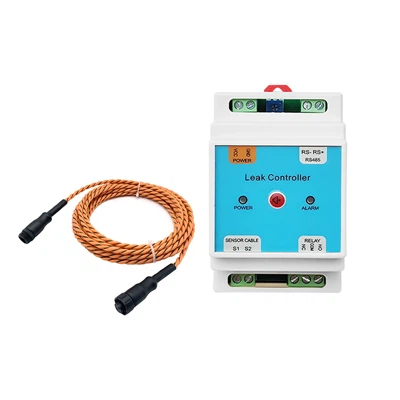
Now, non-contact conductance systems, which are perfect for applications where you can’t place probes inside a pipe or tank. We deploy these for municipal storm drain networks, around underground storage tanks (USTs), and for surface monitoring in industrial yards. These systems use a network of conductive mats or sensor cables laid over the area you want to monitor, and they measure the conductance of any liquid that touches the mat or cable. The principle is the same as contact systems, but the sensor is on the surface instead of inside the fluid. For example, if a gasoline tank in a gas station develops a leak, gasoline is actually a non-conductive fluid, so a single mat might not pick it up—but most underground tank leaks also release small amounts of water or vapor that seeps into the soil, creating a conductive pathway. Or, if a wastewater pipe under a parking lot leaks, the effluent is highly conductive, so the sensor mat will detect the current from the leak as soon as it touches the mat’s surface.
Non-contact systems have a few unique benefits. They’re extremely easy to install—we can lay a sensor mat over a new parking lot during paving, or run sensor cable along existing drainage lines without digging up the whole pipe. They’re also low-maintenance; there are no moving parts to replace, and the sensors are sealed to withstand heavy foot traffic, rain, and temperature changes. A common misconception we hear from clients is that non-contact systems can’t tell the difference between a water leak and a conductive liquid like oil or chemicals, but that’s not true—our systems are calibrated to detect conductance thresholds specific to the fluids you’re monitoring for, so you can set alerts for leaks of a certain minimum conductance, reducing false positives from rainwater (which has a lower conductance than industrial effluent) or cleaning water.
Now, let’s address a few of the common concerns people have about conductance-based systems, because I know you might be wondering if these systems will work for your specific scenario. The first is: what about changes in the primary fluid’s natural conductance, like seasonal shifts in pipe water that might trigger a false alert? That’s a valid worry, but modern conductance systems are designed with baseline calibration features that adjust for natural fluctuations. Instead of a fixed conductance threshold, the system learns the normal range of conductance for your specific fluid over a 7 to 14-day initial setup period. If the baseline shifts slowly—like during a change in water treatment at a municipal plant—the system updates its calibration automatically, so it only flags sudden, unexpected changes that indicate a leak, not slow, natural variations. We’ve also integrated our systems with weather data feeds to filter out high conductance spikes from heavy rain, which is a common source of false alerts for drainage line monitors.
Another concern: can conductance systems detect small leaks? As I mentioned earlier, yes—we’ve tested our contact sensors to detect leaks as small as 0.5 milliliters per minute in a 15cm pipe, which is far smaller than the leaks most other methods can catch. That’s critical for industries like pharmaceutical manufacturing, where even tiny leaks of expensive solvents can lead to product loss or safety hazards, and for municipal water utilities that face millions of dollars in lost revenue from unaccounted-for water. For perspective, a 1mm leak in a 50cm municipal water pipe can waste over 2.5 million liters of water per year—enough to supply 15 homes for a year. Catching that leak before it grows is not just cost-effective, it’s essential for sustainability.
One question we get a lot is how conductance systems compare to other popular leak detection methods. Acoustic systems, for example, use microphones to listen for the sound of water escaping from pipes. They’re effective for large leaks in rigid pipes, but they struggle in old, clay or flexible pipes where sound dissipates quickly, and they’re easily triggered by normal pipe noise like water flow or heating system expansion. Pressure monitoring only detects leaks that cause a measurable drop in pressure, which means small, slow leaks can go undetected for weeks or months, leading to more damage and higher repair costs. Thermal imaging works for surface leaks, but it can’t detect leaks inside pipes or underground, and it’s expensive to deploy for large areas. Conductance systems strike a middle ground: they’re accurate for both small and large leaks, work underground and inside closed systems, and have a far lower false alert rate than most competing methods.
Now, I want to talk about what goes into a high-quality conductance-based leak detection system, because not all systems are created equal. As a supplier, we’ve seen cheap, off-the-shelf sensor kits that don’t have the calibration or filtering features to deliver reliable results, and they end up costing clients more in false alerts and repairs than the system is worth. When you’re evaluating a system, here are the key features to look for:
First, dual-probe or multi-probe sensors. Single-probe sensors can only measure conductivity at one point, and they’re prone to false readings from debris or mineral buildup on the probe. Dual-probe sensors measure the difference between two points, so they can distinguish between a leak (which creates a sudden change in conductance between the two points) and debris (which is a local, temporary change). For example, a piece of scale stuck on one probe will cause a small shift, but it won’t affect the conductance between both probes, so the system won’t trigger an alert.
Second, baseline calibration and adaptive learning. As I mentioned earlier, a system that uses a fixed threshold will fail if your fluid’s conductance shifts naturally. Look for a system that calibrates to your specific environment over time, and allows you to adjust thresholds based on the fluids you’re monitoring. For clients with multiple types of fluids, like a plant that uses both water and chemical solutions, our systems let you set custom conductance thresholds for each line, so you only get alerts relevant to your operation.
Third, real-time monitoring and alerting. A leak is only useful if you know about it right away. The best systems connect to your facility’s SCADA system or send alerts to your maintenance team via email or text, with details on the exact location of the leak, the size of the conductance shift, and even a recommendation for the next steps. Some of our clients use these alerts to schedule repairs during off-hours, reducing downtime and disruption to their operations.
Fourth, durability. Sensors for industrial or underground use need to withstand extreme temperatures, corrosion, and physical damage. Our probes are made of stainless steel or PVC, designed to resist corrosion from chemicals and moisture, and sealed to IP68 standards, meaning they can be fully submerged in water or soil for years without failing. We also offer 24/7 remote support, so if a sensor does need maintenance, our team can troubleshoot it without sending someone on-site, cutting down on repair time.
Let’s wrap this up with a real client success story to put it all in context. Last year, a municipal water utility in the Midwest contacted us because they were losing 1.8 million liters of water per day from unreported leaks in their 50-year-old distribution network. Their previous leak detection method was manual surveys with acoustic microphones, which only found 30% of leaks, and the leaks they did find were already large enough to cause noticeable pressure drops in the system. We installed 45 contact conductance sensors along a 12km section of their main pipe, and within six months, the system detected 11 leaks that the acoustic surveys had missed—all under 5mm in diameter. The utility reported a 22% reduction in unaccounted-for water in that section, saving them over $180,000 in water and repair costs in the first year alone. That’s the kind of impact a well-designed conductance-based system can have, whether you’re a small business, a manufacturing plant, or a municipal utility.

If you’re tired of false alerts from other leak detection methods, or you’re looking to reduce the cost and waste from hidden leaks, we’re here to help. Our team works with clients across industries to design, install, and maintain conductance-based leak detection systems tailored to your specific needs, from small-scale drainage line monitoring to large industrial process networks. We don’t just sell equipment—we provide end-to-end support, from initial site assessment to ongoing monitoring and maintenance, to make sure your system works reliably for years to come. If you’re ready to talk about how a conductance-based system can solve your leakage challenges, reach out to our team to schedule a consultation to discuss your requirements and next steps.
Leakage Detection Cable References
- Mays, L. W. (2011). Water Distribution Systems Handbook. McGraw-Hill Education.
- American Water Works Association. (2017). Leak Detection and Repair for Water Distribution Systems. AWWA Manual M37.
- ASTM International. (2020). Standard Test Method for Electrical Conductivity of Water. ASTM D1125-20.
- Laboratory Products Association. (2019). Conductivity Monitoring for Industrial Process Systems. LPA Technical Report Series.
Shenzhen Goldkoon Automation Equipment Co., Ltd.
As one of the most professional leakage detection system manufacturers and suppliers in China, we also support customized service. Please feel free to wholesale advanced leakage detection system made in China here from our factory. Contact us for more details.
Address: 3rd Floor, Building 3, Mingrenju Industrial Park, No. 10, Maotian Road, Kengzi Sub-district, Pingshan District, Shenzhen City, Guangdong Province, China
E-mail: gold@goldkoon.com
WebSite: https://www.goldkoonsensor.com/
