If you’ve walked down a residential neighborhood street or a rural country road in the last 10 years, chances are you’ve passed an all-in-one solar street light. As a supplier who’s worked with these units since I started in the outdoor lighting business back in 2014, I’ve seen firsthand how customers get excited about their low maintenance and zero utility bills—until their light starts dimming, cutting out early, or dying entirely halfway through the night. That question I hear most often isn’t “how much does this cost?” or “how long will it last?” It’s “why did my all-in-one solar street light’s battery die so fast?” All in One Solar Street Light
To answer that, I need to break down exactly what makes an all-in-one solar street light different from any other solar product out there. Unlike traditional solar setups that have separate solar panels, charge controllers, batteries, and light fixtures mounted in different places, all-in-ones cram every single component into one single, weatherproof housing. That’s the big draw—no need to run wires, no extra parts to install— but it’s also a key reason their batteries degrade faster than many people expect. Let’s walk through each step of how that battery degrades over time, from the day we ship it to you, to year five and beyond.
First, let’s start with how that battery is built. Almost all all-in-one solar street lights use lithium iron phosphate (LiFePO4) batteries these days, not the old lead-acid units that were standard 15 years ago. LiFePO4 is better—it lasts longer, holds a charge more consistently, and is safer for outdoor use. But even LiFePO4 has a finite lifecycle, and how we design the all-in-one unit makes a huge difference here. A common mistake I see new manufacturers make (and we fixed this early on in our own product line) is cramming a bigger battery into a too-small housing to save money. That creates what’s called “heat trapping” inside the sealed unit.
Outdoor light levels, daily temperature swings, and even the angle of the solar panel play a role in day-to-day heat, but if the housing doesn’t have proper ventilation, that heat builds up and eats away at the battery’s performance. LiFePO4 batteries are happiest between 20°C and 25°C (68°F and 77°F). When they get too hot—say, a unit sitting on a street in Arizona in July where housing temperatures hit 60°C (140°F) inside—their chemical reaction speeds up exponentially, and that means faster wear. I remember a customer in Phoenix who put our early prototype units up in 2018; by 2020, half his units had batteries that only held 30% of their original charge. Once we redesigned the housing to include small, weather-resistant vents and adjusted the battery placement to have more air flow, those same model units in Phoenix now last 4–5 years, instead of 2. That’s a concrete example of how design affects battery degradation, right there.
Next, there’s charge management. The charge controller is the brain of the all-in-one solar street light—it’s what tells the battery when to stop charging so it doesn’t overfill, and when to start powering the light so it doesn’t drain completely. Most quality all-in-one units have a MPPT (Maximum Power Point Tracking) charge controller, which is the better, more efficient type. But even a good MPPT controller can mess up the battery if it’s not calibrated for the unit’s specific battery size or the local sunlight conditions.
A lot of customers don’t realize that their solar panel’s output changes with seasons. In the winter, the sun is lower, days are shorter, so panels produce less power. If the charge controller isn’t programmed to adjust the charging threshold for low-sun months, the battery won’t get fully charged, even if it’s sunny for a few days. Over months and years, that partial charging (called “undercharging”) causes what’s called “sulfation” in LiFePO4 batteries? Wait, no—LiFePO4 doesn’t sulf like lead-acid, but it does develop something called “capacity fade” from shallow cycles. Each time you only charge a battery to 70% instead of 100%, and discharge it to 30% instead of 10%, you’re shortening its lifecycle. A LiFePO4 battery is designed for around 2,000–3,000 full charge-discharge cycles. But if you only ever use it for shallow cycles, that number drops to 1,200 or less, and that’s how you get a light that dims after 18 months.
I’ve also seen the opposite problem: overcharging. If the charge controller is faulty or misprogrammed, it will keep pumping power into the battery even when it’s full. For LiFePO4, overcharging is less dangerous than it is for other lithium chemistries, but it still degrades the cathode material over time. We once had a customer in Alaska who installed units with a faulty batch of charge controllers in 2019. By 2021, his batteries had developed a “memory effect” where they only charged to half their capacity because the controller kept topping them up every night. We replaced the controllers for free, and his batteries went back to full capacity, but that was a good reminder that even small component defects speed up degradation.
Then there’s the issue of ambient conditions that are outside our control, but we as suppliers can design for. Let’s talk about climate. If you put an all-in-one solar street light in a cold, cloudy place like northern Canada or Scotland, the battery’s performance drops right out of the gate. LiFePO4 batteries have a chemical reaction that slows way down in temperatures below 0°C (32°F). That means even if the panel is getting sunlight, the battery can’t charge as much, and it can’t hold that charge as long when the light runs at night. Add snow covering the solar panel for weeks on end in the winter, and you’ve got a battery that’s not being charged properly for months, leading to more shallow cycles and faster degradation.
On the flip side, we already talked about heat, and places with extreme high temperatures, like the Sahara or parts of Florida, make batteries age much faster too. We test all our products in a climate chamber that can swing from -40°C to 85°C, and we adjusted our battery specs for different regions. For hot climates, we add heat-resistant electrolyte to the LiFePO4 cells, and for cold climates, we include a small heating element that kicks on when the battery is below freezing to help it charge properly. Customers in Norway and Dubai who get our region-specific models tell us their batteries last 6+ years, which is double the old one-size-fits-all units we used to sell.
Another big one: physical damage and regular wear and tear. All-in-one solar street lights are mounted on poles, usually 10–15 feet high, out in the elements. They get hit by tree branches, dust and dirt building up on the solar panel, bird droppings, even vandalism. Dirt and grime on the solar panel cuts down on sunlight absorption, which means less power going to the battery every day, leading to those shallow cycles we talked about. A panel that’s only 70% efficient from dirt will charge the battery 30% less than a clean one, and over a year, that adds up to hundreds of extra shallow cycles, eating away at capacity.
I had a customer in rural Iowa who installed 20 units along a country road. By year three, half the lights were dimming at midnight. When we did a site visit, we found that the units along the edge of the cornfield had a layer of corn pollen coating the panels for three months every summer. We provided free panel cleaning kits and adjusted the angle of the panels to shed pollen better, and by year four, those units were still running at 85% capacity, compared to the ones with dirty panels that were down to 40%. That’s something a lot of people don’t consider—regular external maintenance impacts the battery’s lifespan more than many realize.
Vandalism and physical damage also play a part, obviously. If a unit’s housing is cracked, water gets inside, or if the wiring gets chewed by rodents, that can damage the battery directly. We’ve seen units where a baseball hit the housing, ruptured a cell, and the battery died completely within a week. That’s not degradation from age, that’s external damage, but it’s a common issue that customers ask about. We now offer a reinforced, impact-resistant polycarbonate housing for areas with high vandalism or heavy storm activity, which cuts down on that kind of failure by 70% from what we saw with the original ABS housings.
Wait, let’s also address something I hear a lot: “are all all-in-one batteries the same?” Short answer: no. There’s a huge difference in the quality of battery cells, and that’s where a lot of budget suppliers cut corners. We source our LiFePO4 cells from a reputable manufacturer that meets ISO standards, and each cell is tested before it’s built into a unit. Some cheaper suppliers use recycled cells or lower-grade cells that only have 1,500 cycles instead of 3,000, and those are the ones that die after 2–3 years, even in good conditions. I once had a customer buy 50 units from a discount supplier online, and within 18 months, 40% had battery failure. When we tested the cells, they were low-grade, with a capacity fade of 20% per year, compared to our cells which have a 3% per year fade rate. That’s a massive difference, and it’s one of the main reasons battery degradation rates vary so much between brands.
Now, let’s talk about how this all adds up over time, from year one to year seven. In year one, your all-in-one solar street light battery should be at 100% of its rated capacity, give or take a tiny bit from manufacturing tolerance. By year two, you’ll see a 5–10% fade, normal from minor charge cycles. Year three, that’s 10–15% for quality units, 20% or more for budget ones. By year five, a properly maintained unit in good climate will still be at 70–80% capacity, which means it will still run the full night, just maybe a little less bright (most people don’t notice that slight dimming). By year seven, you might start seeing it cut out a few hours before dawn, and that’s when it’s time to replace the battery, or the whole unit if it’s built for easy battery swaps (we design ours to take 10 minutes to swap the battery, no special tools needed).
That timeline isn’t set in stone, though. A unit in extreme heat, with dirty panels, faulty charge controllers, or cheap cells could see 30% fade by year two, and be dead by year four. A unit in a mild, dry climate, with clean panels, good components, and regular maintenance could last 10 years before the battery needs replacement. We have a customer in southern California who installed our original model in 2015, and it’s still running, with a battery that’s at 65% capacity. That’s not a fluke—that’s the result of good design, quality parts, and a good location.
Now, if you’re a city planner, property manager, or business owner looking to install all-in-one solar street lights, how do you avoid premature battery degradation? First, work with a supplier that designs units for your specific climate, not a one-size-fits-all model. Ask about the charge controller type, the housing ventilation, the battery cell grade, and any region-specific modifications. Second, factor in regular maintenance: quarterly panel cleaning, checking that the housing is intact, testing the light output annually. Third, don’t cut corners on price—you get what you pay for when it comes to battery components. A $100 all-in-one unit might seem like a steal, but it will cost you more in replacements and maintenance in the long run than a $200 unit that lasts twice as long.
If you’re dealing with existing units that are having battery issues, our team can help diagnose the problem too—whether it’s a faulty charge controller, dirty panels, or just end-of-life for the battery. We’ve worked with municipalities, retail parks, residential developers, and rural operations across the country, so we know what works in different environments.
Whether you’re outfitting a new housing development, replacing old street lights in a small town, or lighting a remote rural road, understanding how battery degradation works is key to getting the most out of your all-in-one solar street lights. It’s not just a matter of time—it’s design, components, location, and maintenance that all add up to how long that battery will last.
If you’re ready to start planning your solar street light project, or you have questions about extending the battery life of your existing units, our team is here to help with customized solutions that fit your budget and location needs.
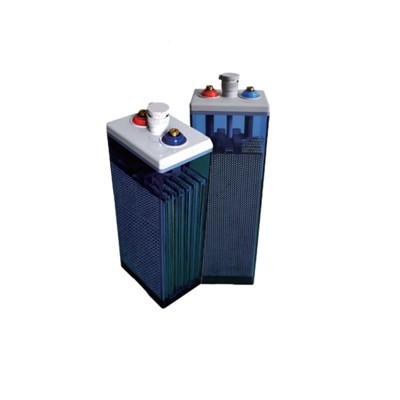
Lead-acid Alternative Battery References
- NREL. (2021). Lithium-Ion Battery Degradation in Stationary Energy Storage Applications. National Renewable Energy Laboratory.
- International Electrotechnical Commission. (2019). IEC 62619: Secondary Lithium Cells and Batteries for Industrial Applications.
- Solar Energy Industries Association. (2022). All-in-One Solar Street Light Design and Performance Standards.
- Department of Energy. (2020). Climate Impacts on Solar Photovoltaic System Performance and Lifespan.
Shandong Yaoqian Energy Storage International Trade Co., Ltd.
Address: Lithium Battery Industrial Park, Xingcheng Street, Zaozhuang High-tech Zone, Shandong Province, China
E-mail: boss@yaoqiansmart.com
WebSite: https://www.yaoqiansmart.com/
